TPMDC
« TPMDC Morning Roundup | Home | Are Executive Pay Caps Getting Sliced From the Stimulus? »

House Stimulus Plan Would Provide Health Care to 8.2 Million

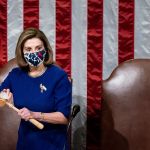
As House Speaker Nancy Pelosi (D-CA) jockeys with the Senate to preserve elements of her chamber's economic recovery plan, health insurance benefits are one of the major issues that need to be reconciled.

The House stimulus provides $40 billion to create a 65% government subsidy for COBRA, the health insurance program for unemployed Americans -- but the Senate centrists sliced that in half for their stimulus, cutting COBRA to $21 billion or a 50% subsidy.

The worthiness of maintaining the House's 65% COBRA subsidy is clear to anyone who's ever paid to maintain employer-sponsored health benefits after leaving a job. COBRA is prohibitively expensive for even those in two-income families, and slicing the subsidy would put the coverage out of many people's financial reach.

But how many people would get health care under the 65% subsidy? Pelosi asked the non-partisan Congressional Budget Office that question, and she got her answer last night.

7 million adults and dependent children would get the subsidized COBRA by the end of this year, the CBO told Pelosi in a letter available on their web site. Another 1.2 million people also would get health coverage under the House stimulus, the CBO said, thanks to a provision that secures Medicaid coverage for low-income workers who lose their jobs and have no other option.

Unfortunately, the Senate didn't touch the Medicaid issue in their stimulus. And something tells me senators won't be eager to debate the health care benefits in the two competing bills, because it's a fight the House will win.


37 Comments

| Leave a comment
user-pic

Why is it a fight the House will win? Because people should have health care? Because it's right, or because it's fair? As far as I can tell, these sorts of moral questions are not decisive in the debate on the stimulus. The important question is, will it make Ben Nelson feel like a stud?

user-pic

Stop giving money to the health insurance industry. Get this bill passed and then tackle healthcare reform in a big way. No more hand outs to insurance interests.

user-pic

That's a good point. The fact that COBRA is prohibitively expensive is a symptom of the larger disease. Giving insurance companies more money isn't a cure or even a curative, though that same 40 billion could go a long way toward fixing the system as a separate, short-term effort following the stimulus.

user-pic

And what are people who need health insurance supposed to do while this ideal system is under construction?

Every time I turn around, someone else I know, or someone related to someone I know, is losing a job, and their health insurance with it. How are they supposed to do for health care, especially if they or a dependent have a pre-existing condition?

The system we have is far from ideal, but can we please not tear it down without something ready to fill its place? (And far better would be to build on what already exists. I'm sorry it's not perfect, but this is the real world we are living in, not Nirvana.)

user-pic

This is a family "pain" issue when someone loses their job. I say it is worth the fight and will help lead the way for a health care reform battle that is looming ahead. I garee that insurance companies are the real problem in health care change but let's stop the aweful choice families have to make to keep them healthy.

user-pic

I guarantee the insurance companies love this provision. This seems like more placebo initiatives that keep us from going big on health care reform as a separate, more focused effort.

user-pic

While I agree with your overall point, real health care reform isn't going to happen until later this year, at the earliest. People need help until then. This isn't a placebo as much as emergency first aid.

user-pic

I have a better idea for emergency first aid as opposed to shoveling more money down that rat hole. In the current crisis, the unemployed temporarily can get medicaid. That would be emergency first aid, not another hand out to the criminal health insurance industry.

user-pic

Great minds think alike?

user-pic

Yep, your posts sound so much better though.

As an aside, I really don't understand all this handwringing over healthcare reform. Approximately 2/3rd's or so of the population is operating under government controlled healthcare coverage. Just expand it to that additional 1/3, which is in the age group that by and large doesn't have healthcare issues, and we are done. It really isn't that complicated.

user-pic

Thanks for the kind words.

I agree that perhaps the government-run programs could be expanded to cover all 320 million, though 2/3 aren't currently being covered unless there is a new study out that I haven't seen. The reason the Profit-Above-All-Else is so powerful is their percentage of the market place.

I think we could just as easily regulate the holy hell out of health insurers and if they can still make a profit, great. Otherwise, we design a new non-profit code to account for how such a system would need to be supplemented as a non-profit industry. Keep the jobs that currently exist and get rid of the wasted administrative costs of denying care through smart and practical regulations.

I like ideas that work within the existing system to come up with multiple solutions that could work and compete for approval in the "marketplace" of ideas. This is a great forum to start the conversation in, given the variety of political philosophies of the community.

user-pic

I think the only regulation you would need is to require insurance companies to accept any applicant at the community price. Then set up a government program as an optional alternative. One of two things would happen:

1. Insurance companies would get their administrative costs in line to be competitive with the government-run program, or

2. Everyone would choose the government-run program and the insurance company would go out of business.

user-pic

I don't think just accepting everyone is enough to fix the problem.

Insurance companies would need to be prevented from lowering their costs (increasing their profits) by denying care, something a government plan wouldn't have as a cornerstone to their mission and would make it much more expensive to manage. I think our final solution should be designed to make both scenarios work on a level playing field.

There is still something to having private markets for things, if we can use common sense in how we approach regulating them.

user-pic

Hate to disagree on the private market aspect of this. The private markets had their chance and blew it. Also, healthcare is like a monopoly like the power company or is a government function like the police and fire department. You don't have competition for the police department and you can't have competition for the power company.

The world tried the us model on healthcare and kicked it to the curb decades ago. Look where they are and where we are. We have to get into the 21st century on this and kick the health insurance industry to the curb.

user-pic

I don't disagree, but throwing the baby out with the bathwater doesn't make sense either.

By that standard, the government should take over food production and communications and energy (though I agree with this one) and every other sector that is raping the country because of a lack of regulation. A case could be made that the profit motive should be removed or greatly curtailed in certain areas, no doubt, but we need to define what that looks like from a non-ideological standpoint. We need to force common sense standards and accountability on Corporate America and then revisit the problems from a new vantage point with new data.

Again, I would hate for the "cure" to be worse than the disease.

user-pic

That's not really true. People can and do hire private security, for example. Most don't for the simple reason that the government-provided service provides what they need at a lower cost. I'd expect eventually that health care would go the same way, but if private companies want to try to compete with the government program, why not?

user-pic

Interesting you point out the private security thing. I was listening to npr and some economist was pointing out that the private security firms are getting a free ride from taxpayers and the police. They should be charged for police responses to events and are not. If they were, they would go the way of the dinosaur.

Also, I agree on allowing the carriers to compete with a government program. That is totally not objectionable. If someone wants to pay extra so be it. At the end of the day, you are right and the private plans would go the way of the dinosaur as well.

user-pic

I think the way to approach this is to have the government plan be very explicit about what is covered and how much, then also require insurance companies to do the same. Require certain minimum coverage and a line-by-line comparison to the government plan for everything else. If people still want to choose the private plan that might offer less coverage, that's their choice.

You'd probably also need a "bare bones" policy option and require everyone to have at least that.

Overall, though, I don't think it comes down to that many regulations. You just need to pin insurance companies down as to what's covered so they can't weasel out of paying later. Pre-existing conditions is their usual excuse, so as soon as you eliminate that, most of their ability to refuse to pay disappears.

user-pic

I would second this approach. I think many Americans, left and right, would as well. It's a great way to let two competing ideologies duke it out and see which one wins, without handicapping either or further damaging the country while reform is in progress.

user-pic

No prob.

By the way, it's just a guesstimate on my part. The way I come up with approximately 2/3rds is 1/3 of the older population is covered by medicare. 1/3 of the youngest is covered by schip. Throw in veterans covered by the VA and medicaid and you are probably around 2/3rds. Also, the insurance industry has their tenicles in that 2/3rd of the population as well, unfortunately, and is profiting hansomely from it.

The primary healthcare costs has to be associated with the older 1/3 of the population and veterans, which is already being covered by the government.

Get rid of the health insurance industry, increase funding for medicare and healthcare costs will go down overall and our products will instantly become more competitive as they won't have a healthcare cost associated with them. We have many models to follow throughout the world and can cherry pick the best of each.

user-pic

No argument about trying to design a solution that uses existing systems, though the math is still a little fuzzy for me.

SCHIP only covers about 4 million children and the VA only covers veterans with service-connected disabilities and retired active duty folks. Medicare covers 40 million retirees and people with chronic disabilities, but only up to 80% of the billed cost. Of those 40 million, many also make up much of Medicaid's 46 million as a way to cover the remaining 20%. 40 million remain totally uninsured.

By my count that leaves the vast majority on private health insurance of one form or the other.

I am not convinced that throwing more money at the government programs as a way to reform the health care system is the best way to go, though I agree that a case could be made that it remains a huge piece of the pie and can be used as a model to reform the Profit-Above-All-Else health insurance industry.

user-pic

And it would probably be cheaper, too. Administrative costs for Medicare and Medicaid are a fraction of those for private insurance. I see that the House plan does just that for 1.2 millon low-income workers who lose their jobs and don't have a COBRA option.

Expect the insurance lobby to go absolutely nuts if anyone suggests this. It might be worth it just for the entertainment value. :-)

user-pic

It definitely would be cheaper, just like the cbo has proven that outsourcing of government functions is substantially more expensive than just doing it in house.

I would love the entertainment value as well.

user-pic

Not in the case of many social services being provided via non-profits. Government-run social services cost ten times as much and deliver half the value as their private, non-profit counterparts. There is a reason why it is a 300 billion dollar a year industry.

user-pic

Except I don't know that it is first aid. It may more of a matter of a "good Samaritan" moving someone with head injury. COBRA has so many structural deficiencies that the "cure" may be worse than the disease.

I would see that same 40 billion propping up state Medicaid assistance for those that need rather than going into the bottomless pit that is our Profit-Above-All-Else health insurance system. At least Medicaid's mission profile doesn't include denying care as a first resort.

user-pic

Have you heard anything from the conferees regarding the reinstitution of Medicaid and COBRA subsidies back into the package?

user-pic

I'm a little confused. $40B pays for a 65% subsidy but half as much pays for a 50% subsidy? Those numbers don't make sense. Half as much money should pay for half the subsidy. What's missing here?

user-pic

Less people will elect COBRA as the subsidy goes down. (Say out of 100 people, 75 take Cobra with the 65% subsidy. If the subsidy is reduced to 50%, only 60 people might take it.) Totally made up numbers, but that's what the CBO tries it's best to guesstimate.

user-pic

Exactly the case. And they typically do this by laying the numbers over a bell curve. So if you visualize one end of the bell and imagine sliding left on it - you can see why the relationship would not be x/y - but slightly more exponential in appearance.

user-pic

Probably more sigmoidal in shape, as I expect that you'll never have more than 100% buy-in. ;)

user-pic

End employment based health insurance. The only legitimate solution is Public single payer health finance (not insurance).

user-pic

Just here to point out that single-payer is not the only kind of national, universal coverage health care. It is also not the only kind that works.

user-pic

Medicaid is very different from Medicare. And it is the former that the House would provide. Most providers take Medicare. It's easy to bill for and pays a decent amount. Very few providers take Medicaid.

Medicaid is the program for the poor, not the one for the elderly. Maybe you didn't know there was a difference. Maybe you didn't know that services for the poor are very limited. Payments are very limited too and many services need prior-authorization in an onerous process. It's an extremely demeaning government assistance program, as demeaning as applying for welfare.

If unemployed folks could be placed into the Medicare system, that would make sense. And it would be far more humane to the participants, who (under Medicaid) would soon find that their usual doctors are unwilling to see them unless they pay out of pocket.

Why are we as a society treating people as second class citizens by not providing quality health care for everyone? By not condemning some to substandard conditions?

It grieves me terribly to see what an uncaring nation we have become. Uncaring to people down on their luck!

user-pic

Oops, sorry. I am not that versed in the distinctions. From now on I will use the term medicare.

user-pic

You make a good point about Medicaid. I can tell you from first-hand experience that most doctors do not take Medicaid and furthermore, that those who do frequently treat their patients with second-class service.

It's pretty pathetic that virtually every industrialized country in the world has figured out how to provide health care for their citizens except us.

user-pic

Good points. Medicaid is often invaluable, though, to those on Medicare because it tends to close the 20% gap that Medicare doesn't cover.

Extending Medicare coverage as a COBRA substitute to newly unemployed people makes a lot of sense, though Medicare is still in need of drastic overhaul if it is going to be scaled to work for 320 million. It would probably be OK with another 7 million or so citizens that the 40 billion is meant to cover, but much more than that and we will see the Medicare system starting to fray under pressure it isn't designed to handle.

I just wish we would be talking about all the available solutions instead of a very small subset of programs that have just as many issues as the issue they are being offered to address.

user-pic

Incidentally, the title of this post should be: "House Stimulus Plan provides $40 Billion handout to the insurance industry."

Leave a comment

Advertisement
Please disable your adblocker!
Ads are how we pay the bills!

Subscribe

Josh
Marshall

Bio

Elana
Schor

Bio

Matt
Cooper

Bio

Eric
Kleefeld

Bio

Capital Wire

Advertise Liberally
Share
Close Social Web Email

"To" Email Address

Your Name

Your Email Address