TPMDC
« The Un-Funny Side of Removing Pastel Lights From the Stimulus | Home | Coleman Lawyer: The Constitution Now Requires Counting Invalid Votes »

The Banking Lobby and Its Discontents

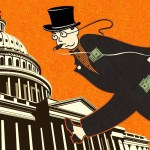
It's a truism of Washington that the more your industry is regulated and influenced by the actions of the federal government, the more you're going to want to make your case in the halls of Congress and in the federal agencies that influence your business's fate. So at this important moment, when the federal government is preparing to overhaul the financial services industry, in all it's many parts, and when the largest bank bailout ever conceived is being rolled out, and the public is up in arms, it's worth stepping back and taking a look at how the affected industries will make their case and who they will make it to

First, it's worth keeping in mind that financial services are a diverse lot. The American Bankers Association represents the mainstream banks while the Credit Union National Association representes the nations credit unions. There's the Financial Services Forum that represents the largest financial institutions and others. The Independent Community Bankers of America have different interests, too. It opposes the merger of multiple banking regulators that's favored by larger banks. Then there are the divergent needs of semi-banks, represented by the Financial Services Roundtable which includes the likes of General Electric.

Private Equity has the Private Equity Council and the hedge funds industry as the Managed Funds Association, headed by Richard Baker, a former Republican Congressman from Louisiana which is most determined to stop a bill that would require them to disclose their holdings.

Not surprisingly, members of comittees that regulate the financial services tend to do quite well in terms of campaign contributions from the industry. Look at Rep. Jim Himes of Connecticut. The Democrat represents a lot of constituents who work in the financial services industry and according to the Center for Responsive Politics collected more from those companies that have received TARP monies than any other member. The center's full listing of members of the committee and what they got from TARP recipients is here. In the Senate, Chuck Schumer has long been seen as a defender of the financial services industry, a point articulated at length in this New York Times story in December. As financial services reform makes its way through Congress keep an eye on Schumer and what happens to proposals that come out of Barney Frank's Financial Service Committee when they hit Chris Dodd's Banking Committee. Today, for instance, the Senate Banking Committee is holding a hearing on proposed credit card regulations. which is a very big deal to bankers and of no real consequence to hedge funds. In the coming days, we'll keep an eye on those fights that have a real impact on policy but that also illustrate larger points about Washington has and hasn't changed under Barack Obama.


3 Comments

| Leave a comment
user-pic

Impressive, to be able to distill how Washington "has and has not changed" under Obama....after less than a month of his being in office.

user-pic

Of all these interests, it is the Mutual Funds Association that has to be the focus. Disclosure is the only way to get a handle on the financial crisis. Otherwise, taxpayers are being asked to subsidize risk without a clear picture of the risk factors. There is no doubt that the bulk of the bad assets are not assets at all but derivatives that are exploding before the bulk of them have turned a true profit. This would be like the auto insurance industry if suddenly more than half of insured vehicles got into a catastrophic wreck over a short period (1-3 months)... the payouts would bankrupt the industry because there aren't enough holdings to cope with the influx.

This happened with the housing market, which is exploding incrementally, with foreclosures roughly tied to mortgage rate adjustments. This is a daisy chain IED that will continue to rattle the financial sector because these bad mortgages were bundled into AAA bonded derivatives that have to be "covered" in the event of their destruction. There isn't enough time for finance to recoup their holdings while they have to pay out these losses. And the losses will keep coming so long as these derivatives remain liabilities.

The international community needs to outlaw derivatives and scrub them off the books. In essence, declare a jubilee... but there are enough creeps out there who are trying to collect that they are willing to keep the financial sector hostage while the world economy bleeds out.

user-pic

It'd be nice to get a feel for the relative power of these lobbies. do the mutuals have any clout/allies?

Leave a comment

Advertisement
Please disable your adblocker!
Ads are how we pay the bills!

Subscribe

Josh
Marshall

Bio

Matt
Cooper

Bio

Eric
Kleefeld

Bio

Advertise Liberally
Share
Close Social Web Email

"To" Email Address

Your Name

Your Email Address