Health Reform Crisis: Groups Backtrack On Promised Cost Cuts
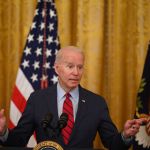
On Monday, President Obama hosted an event at the White House with five health care industry stakeholders and the SEIU announcing that the groups had reached an agreement to reduce the growth in health care costs by 1.5 percent a year for 10 years. The administration called it a watershed moment, and suggested it would save consumers upwards $2 trillion.
Now health industry lobbyists, including, specifically, the American Hospital Association, are saying that the administration has misled them and the country. AMA President Richard Umbdenstock said the groups had agreed to gradually ramp up to the 1.5 percentage-point target over 10 years - not to reduce spending by that much in each of the 10 years," according to Politico.
That's a huge difference.
Here's what they said in their letter:
As restructuring takes hold and the population's health improves over the coming decade, we will do our part to achieve your Administration's goal of decreasing by 1.5 percentage points the annual health care spending growth rate--saving $2 trillion or more.
Pretty clear cut. But so much for all that. SEIU didn't have a specific comment, referring me instead to another letter the groups put out today (PDF) reaffirming their commitment to the earlier goal. But clearly (and unsurprisingly) there's a great deal of dissent about it--enough, no doubt to complicate the groups' efforts to meet their aspirational June 1 deadline to put forth specific and adequate cost cutting proposals.
Kevin Drum calls the whole thing a charade. Richard Kirsh, the national campaign director for Health Care for America Now says, basically, 'we told you so.'
"Our reaction after the event was we need legislation because it's easy to have good intentions," Kirsch said, "and the real test will be whether they'll agree to legislation."
Basically, the American Hospital Association (and PhRMA and AHIP and all the other groups) represent a great number of people, many of whom raised hell when the details of the agreement were aired.
"There's a danger in Washington," Kirsch added, "of people here talking to themselves so much that they think they can get the rest of the country to follow."
"The president has always been trying to have this open door policy," Kirsch said. "He's had it with Republicans in Congress he's had it with industry. The Republicans slammed the door on him...and now I think you're seeing the health care industry slam the door too."


I think the big problem is that it's pretty obvious that Obama has no real passion for heathcare. Hillary was always better on issue if not good enough. Obama was going to get us out of Iraq (ha) and restore the rule of law (ha, ha).
Sure, he'd like to put a score on the board with a little DLCish wonky tweak that he can call "reform" but he will not mess with the status quo.
Ah, well, back to bailing out the fat cats in the financial industry. Can big insurance be far behind...
May 15, 2009 6:54 PM | Reply | Permalink
This is just a blatantly false statement, from beginning to end. HRC was never better on the issue than Obama. He always said he wanted to get legislation passed in his first term; she always said by the end of her second term. Now he's pushing for it to happen in his first YEAR.
Plus, from a personal perspective, he saw his mother try to navigate the health care death spiral when she had cancer and they tried to deny her coverage. He is extremely passionate about the issue, which anyone can see by the way he refuses to give it up even as a thousand other things seem to be "taking precedence."
May 15, 2009 7:21 PM | Reply | Permalink
Do not feed.
May 15, 2009 10:01 PM | Reply | Permalink
ding dong ding dong ding dong ding dong.
May 15, 2009 9:57 PM | Reply | Permalink
Yes, as history tell us, the Clintons will be our progressive saviors. Keep em' coming, bluetroll.
May 15, 2009 10:05 PM | Reply | Permalink
I suggest you RSS Karen Tumulty. She's got a significant interest in health care reform and had this story early in the morning under the headline: "Underplayed Story of the Day."
May 15, 2009 7:17 PM | Reply | Permalink
Throw the bums out!
May 15, 2009 9:56 PM | Reply | Permalink
Real Healthcare Reform:
Changing Priorities, Incentives and the Rules of the Game; Creating an Electronic Health Record for Every Citizen Who Wants One
If you have the financial resources of Bill Gates or Warren Buffett you needn’t pay money to a health plan each month, since if you get sick or injured – even very seriously - you have more than enough money to pay all your medical bills yourself.
But those of us who have significantly less financial resources must find some other means of dealing with the thousands or even hundreds of thousands of dollars or more of medical expenses that we might incur should a serious illness or injury be our fate.
Enter the concept of “health insurance”.
Large numbers of individuals and/or their employers pay some money each month into one or another big pot called a “health plan”. Those individuals who remain essentially very healthy for many years and then suddenly die or perhaps leave a particular health plan for some other reason – if they have put more money into the pot than was taken out to pay all their medical expenses - wind up helping to pay the medical bills of those members of the health plan who become seriously ill or injured and incur a lot of medical expenses.
Many Americans covered by some form of health insurance don’t seem to fully understand or perhaps choose to ignore the fact that if they become seriously ill or injured, for the most part their medical bills will be paid by the members of their health plan who have remained healthy. Keeping members of a health plan healthy by preventing illness and injury is critically important, but is something not currently given the high priority and attention it deserves.
Some Americans believe that healthcare should become a “right” of every American citizen. If a nationalized single payer health plan were enacted, every American citizen who became ill or injured - for any reason whatsoever - and incurred significant medical expenses would for the most part have his or her medical bills paid by U.S. taxpayers. Many Americans oppose such a system for America recognizing that significant difficulties such as long waiting periods and rationing of care exist in such types of all inclusive government healthcare systems that currently operate in other countries such as Canada and the United Kingdom.
For any health plan to work which has a large number of people pooling their money to essentially pay the medical bills of whichever members of the plan become seriously ill or injured, rules must be established as to when and how much money may be taken out of the pot e.g. “legitimate” doctor bills and hospital bills. Equally important is keeping track of the amount of money that is being put into the pot each month in premiums paid by health plan members or their employers. If too much is being paid out in expenses as compared with the amount being received in premiums, the pot will soon become empty and the health plan will go broke.
As previously mentioned, the monthly premiums paid by individuals or their employers go into a health plan’s big pot from which “covered” healthcare expenses are paid. But also from this pot are paid all the health plan’s administrative expenses including what may be big salaries and golden parachutes for CEO’s and other “healthcare executives” – individuals who may be paid to find technicalities of one sort or another in the health plan’s agreements so the health plan can deny or reduce payments, raise premiums, cancel insurance, or in one way or another minimize or exclude “bad risks” from the health plan. All such questionable business practices are done to enable the health plan to make a profit and remain in business.
Currently we are experiencing continual increases in healthcare costs that are unsustainable and which, if unchecked, will soon seriously threaten the future of the entire American economy. Healthcare costs must be controlled, but how? If a healthcare system made up of health plans is going to have a chance of both meeting the needs of health plan members and simultaneously develop the ability to keep costs under control, priorities, incentives, and the rules by which the game is played all must be changed.
The good news is that a lot of illnesses and many injuries are actually preventable. But how will prevention ever become a top medical priority when doctors, hospitals, and other providers get paid largely for diagnosing and treating illness and injury, not for preventing it?
Although health promotion and disease and injury prevention receive fashionable and socially acceptable lip service, the fact is that most of the participants in what should be more appropriately called our “sickness and injury care system” actually have no significant financial incentive whatsoever to spend any significant time and energy in genuinely promoting health and helping to prevent disease and injury.
Much to the contrary. Other than the actual members of a health plan – patients and potential patients - and their employers and perhaps the employees of some health plans, most participants in our sickness and injury care system - because of the way they are paid - have an enormous (if unspoken) financial incentive for massive amounts of disease and injury – much of which is preventable – to continue to occur in America. Strictly from a financial point of view, for those whose incomes come solely from the treatment – not the prevention - of illness and injury, the more illness and injury that occurs, the better. And if the illness or injury is serious and requires perhaps many expensive tests, multiple surgical procedures, and other very complicated prolonged treatment in an intensive care unit, so much the better; just as long as those unfortunate individuals who happen to be ill or injured are “covered” by “good insurance”, i.e. health plans that are reliable bill payers.
This is not to say that there are not some excellent very dedicated and hardworking doctors and other health professionals - although they are paid on a fee for service basis to care for illness and injury – who nevertheless attempt to essentially work themselves out of a job by making health promotion and disease and injury prevention a top priority with their patients.
It should also be recognized that some existing health plans – e.g. Kaiser and Group Health - combine insurance, doctors, and hospitals into a single entity in such a way that provides everyone - including all the health plan’s doctors - a real incentive to spend time and effort with patients on health promotion and disease and injury prevention as well as on early diagnosis and treatment. But unfortunately the above examples represent only a small part of the sickness and injury care system that currently exists throughout America.
For the most part - because of the way they are compensated – the majority of doctors and other professional providers, acute care hospitals and long term care facilities, pharmaceutical manufactures and pharmacists, medical and surgical equipment manufacturers and personal injury and malpractice attorneys - among others - depend mightily on massive amounts of disease and injury occurring in America; and these participants in our sickness and injury care system would be significantly negatively impacted if a lot of the preventable illnesses and injuries were actually prevented. This must be changed.
Unless the incentives and rules are changed to give as many participants as possible a real financial stake in health promotion and disease and injury prevention, in early diagnosis and treatment, and in maximizing health and minimizing disease and injury, healthcare costs in America will never be brought under control. Making appropriate changes in the incentives and the rules of the game is the real task and challenge of “healthcare reform”.
What about financial incentives for individual health plan members? Should individuals receive a financial incentive to be healthy? It is well recognized that engaging in regular exercise, abstaining from tobacco, and eating moderately so as to maintain a reasonably normal body weight are all significant factors in helping to promote an individual’s health and wellness. These healthy behaviors can all be confirmed by simple tests performed or ordered in a doctor’s office. Why shouldn’t those individuals who practice these health promoting behaviors and comply with recommended immunization schedules and appropriate preventive screening examinations such as for colon cancer and breast cancer pay significantly less in premiums to their health plan each month than those who don’t?
To really reform healthcare we must find ways – through changes in incentives and the rules of the game - to actually prevent what is preventable, to maximize early diagnosis and treatment, and minimize disease and injury with all its associated cost. We must find ways for participants to be part of our “healthcare system” and not just a part of our “sickness and injury care system”.
Significant changes in the rules of the game for our legal system – tort reform – is also critically important so that the gaming of the system now being done by personal injury and malpractice attorneys and their clients can be ended and so that the exorbitant costs to physicians and other professionals for malpractice insurance can be dramatically reduced.
Truly transforming our “sickness and injury care system” into a “healthcare system” by making significant changes in the incentives and the rules of the game may seem to be a formidable task and one that probably has never really been done before on a large scale anywhere in the world. But it is a worthy task and a critically important task for the future of America and its people.
One significant part of this process is developing the capability of creating an electronic health record for every American citizen who wants one. We need a standardized framework that will allow every American citizen to have an individual electronic health record – a computerized medical record - that can be accessed by all the doctors who care for a particular individual, regardless of wherever on the planet the doctors or the patients happen to be. It would be like having your own personal online banking account that only you have the password to, but which you can share with the doctors who are caring for you, wherever you or they may be.
I applaud those who are using their energy and expertise to upgrade our deplorable current paper medical records system and bring medical records in America into the 21st century. Developing a standardized framework for an electronic health record - for every citizen who wants one – created by your doctor with your assistance, with proper security and safeguards - is something that our national government can and should do as a part of healthcare reform.
If done well, electronic health records will be transformational in helping doctors efficiently and effectively care for patients and will save an enormous amount of time, effort, and money which is currently wasted on needless and frequently inaccurate duplication. And having an accurate electronic health record for an individual will also facilitate appropriate health promotion and disease and injury prevention for that individual. Like the telephone and the computer, someday we will all wonder how we ever got along without individual electronic health records.
But all this requires action, not just words. Now is the time for Americans and their leaders and doctors and other health professionals to step up to the plate and begin the process of transforming our “American Sickness and Injury Care System” into an “American Healthcare System” that is worthy of our great country.
Robert Westafer M.D.
May 16, 2009 2:21 AM | Reply | Permalink
Dr. Westafer,
You make a lot of good points. Essentially we need a society that focuses on improved health. Insurance - that is - a group of individuals who pool their funds in order to pay the otherwise unpayable expenses involved in much health care - is an important part of planning for how to deal with medical difficulties and emergencies. This part is impossible for individuals with prior health problems in any system that depends on private insurers who work to insure the most profitable individuals and exclude those with pre-existing conditions and then often go back to use arcane rules to refuse payment for high cost treatments when they are presented. This latter is the source of much of the profitability that health insurers enjoy. These problems must be solve immediately, and the only solution that will work is a universal pool of covered individuals from which no one can be excluded.
Sources of payment for that are the problem. But by removing the high costs of selling the insurance, the high administrative costs individual insurance companies face as they verify that they only pay benefits for those who previously paid into their specific company system, and by simplifying the unnecessary duplicated systems of administration, then by adding a transparent appeal process that is supervised instead of internal to companies that make much of their profit by refusal to pay for covered benefit.
But you want to put a big emphasis on preventive efforts to avoid health problems as a major element in cost reduction. Good! I agree completely. But while that is a very important element in the overall health care system, it is mostly separate from the problem of providing the insurance function that almost everyone requires to deal with unexpected health problems.
The preventive health care involves real changes in the American life style. As someone who has dropped 40 pounds (from 204 lbs to 162)since December by eliminating sugar, alcohol and most carbohydrates I have become very aware of the crap that is being sold as food. One report I read recently pointed out that three decades ago, Mexico had a problem of hunger and inadequate food. Now it has a problem of obesity, much as the U.S. does. The major difference in the food available during that time was the introduction of carbonated sugar drinks (Coca Cola and its competitors.) The FDA food pyramid is skewed to encourage too much (fattening) carbohydrate because the agricultural industry lobbies the Agriculture Department and uses them to sell their products. Restaurants provide excessive portions as well as overly sweetened food.
I live in a suburb that has few walking destinations and rotten sidewalks. Too many cars, and we all use them to drive the eight-tenths of a mile to the nearest convenience store or the mile to the nearest supermarket. The kids are bussed to school even just a few blocks - much of that a security measure, of course. There is not much use of the local parks, and no civic areas where we go as a community. Who is going to walk anywhere if we live isolated lives and don't know our neighbors because we drive everywhere?
So while I agree with you that we need a lot more life-style and preventive health measures, the focus of those measures is much wider that simply the problem of financing expensive medical procedures and paying for that with the fairest, most efficient, low-cost administrative system. One of those problems is more of an accounting/insurance issue, while the other problem is more of a social work/community organization issue. The primary federal-level actions to deal with the community and preventive health issue are encouraging local actions.
Both need to be addressed. But the solutions to the insurance issue are primarily resolvable at the federal level while the social issues are primarily resolvable at the local level. Granted the two issues are closely related in that they go directly to individual health, but the solutions require very different organizational structures and very different approaches.
May 16, 2009 12:53 PM | Reply | Permalink
Long waiting periods and rationing care? We have that in the United States too. It's called I can't afford the surgery please hand me the ibuprofen.
May 16, 2009 4:55 PM | Reply | Permalink
Robert,
If I were asked to create a health care system for our citizens the last thing I would do is start with 100 or more for profit middle men with their 100 different bureaucracies, their 100 different programs, their 100 different co-pays and deductibles, their 100 different approved doctors and hospitals and their 100 different rules on treatment outside the system. It must be a bureaucratic nightmare for those who work in the doctor's office.
Look at the myriad Medicare Advantage Plan's booklets and ask the public what they experienced when they tried to make sense out of the choices.
Single payer.
On another note, maybe we need fewer specialists and more primary care physicians.
May 17, 2009 10:14 AM | Reply | Permalink
Sooner or later people are going to have to learn that playing hardball with Obama is a horrible idea.
May 16, 2009 12:00 PM | Reply | Permalink
"decreasing by 1.5 percentage points the annual health care spending growth rate--saving $2 trillion or more"
"the groups had agreed to gradually ramp up to the 1.5 percentage-point target over 10 years - not to reduce spending by that much in each of the 10 years,"
How do you save $2T by ramping up over 10 years?
Let's keep it simple: no change for 5 years then 1.5% drop in cost for the next 5, and assume no initial growth rate. This calculates the average assuming constant ramp to 1.5% at the end. Then .015 x 5 x $1.6T = $2T is clearly false, the amount would be $120B savings over 10 years. This simple model says that the total savings of incrementally reaching 1.5% drop in annual costs would be $120B. So that cannot be what anyone meant. So, what DID they mean which involved $2T "savings" over ten years?
Also, 1.5 reduction in annual growth rate is NOT a savings, it is a reduction in the rate of increase.
Are they quibbling just just outright lying?
May 16, 2009 4:02 PM | Reply | Permalink
Q: How does the blatant backtracking of the industry tools show that Obama is not and never was serious about healthcare reform?
A: It doesn't . . . unless you're the pessimist troll bluebell!!
If you really believed what you posted and care so much about healthcare reform why did you "stand in the cold to caucus for Obama" as you so often remind us? Why were you sooooo angry about Hillary even being in the administration?
Bluebell, if you had an ounce of shame, you'd get another sign-in since you've been outed as a liar and a chronic complainer so many times under this one!
May 16, 2009 4:13 PM | Reply | Permalink
It was about that war, you know the war Obama was going to get us out of, that war, the war we're still fighting while we're escalating another war we can't win and the costs of those two wars and everything else the defense lobby wants is just one reason why healthcare reform is a sick joke.
May 16, 2009 4:52 PM | Reply | Permalink
Either you're stupid or you think the rest of us are. Let's address the war, that war shall we?
Obama campaigned saying "we have to be as careful getting out of Iraq as we were careless getting in." In what world does that sound like he'd end the war and have all the troops out 4 months into his presidency? In bluebell's lying troll world.
For two years, Obama campaigned on escalating in Afghanistan!!! He made it clear back in 2003 that he supported the War in Afghanistan. So why the surprise that he's doing exactly that? There is no surpise. Only Bluebell lying and trolling.
If healthcare reform is a "sick joke" then that's the "sick joke" you voted for. Obama *never* campaigned on single payer or a public option. He campaigned on making healthcare more accessible and more affordable. He's saying the exact same thing now.
Perhaps if you actually listened to him during the campaign, you wouldn't be here claiming you've been duped!
Again, you've lost ALL credibility and shown that you're nothing more than a professional malcontent. Your posts are sooooo predictably lame. Stop embarrassing yourself and get another log-in. This one is so played . . .
May 17, 2009 8:03 AM | Reply | Permalink
Latest spin, Obama's healthcare "reform" is going to be "self-financing". In other words, you are going to finance it yourself which would be a heck of a lot easier if you weren't also financing two wars and bailing out big banker bonuses.
May 17, 2009 12:12 PM | Reply | Permalink
Oh, and it's also going to be "deficit neutral", again, unlike war and bailouts for billionaires. Healthcare will cost nothing more, not a cent. What a commitment! What passion it must take on this issue to devise a plan that is nothing more than a shell game. Self-financing, deficit neutal: NOTHING.
May 17, 2009 12:18 PM | Reply | Permalink
You may have a point, but nobody knows what it is.
May 17, 2009 10:36 PM | Reply | Permalink
Quite an impressive observation Carla. Sometimes it happens that we waste a large sum of money on insurance and other medical preventions, and on one day we think, that it would have been better to spend on its cure than its prevention. But sometimes, prevention results into a better decision for someone like me. Because of having many heart problems, I was enrolled in a concierge Healthcare program from elite health. I was attacked by a severe heart attack in a party, luckily surrounded by many people. Some of the sudden changes in my body was recognized by me and anticipated immediately. I got a very severe chest pain which was almost unbearable for more than a minute. I got the suspicion that I might be having heart attack, and immediately called my physician on the phone, and explained my condition and its severity. Because of the immediate guidance, I was directed immediately to have an aspirin which I used to carry with me as prescribed by my physician. It was quite a frightening experience for me to face such a heart attack, but somehow I managed to be calm until 911 arrived. I was immediately taken to the nearest hospital, where already my physician were present and have got everything setup according to my medical history. And it was in some matter of seconds that everything was in control. A doctor, who already have the complete knowledge of the medical history and fitness of the person, extra ordinarily ameliorate your recovery process. Hence such a concierge level program from Elite health, helped me a save my life, like many others.
July 16, 2009 11:51 PM | Reply | Permalink