TPMDC
« ABC: House Democrats Bill Costs "$1.5 Billion [sic]" | Home | American Medical Association Endorses House Health Care Bill »

Obama Admin Continues Health Care Media Blitz

Today, two days after House Democrats unveiled their health care plan, President Obama & Co. continue to push hard for support on the bill.

MSNBC aired Obama's full interview with Nancy Snyderman, aka "Dr. Nancy," at noon ET today. In it, he predictably emphasized "self-responsibility," saying, "The American people have to recognize that there's no such thing as a free lunch." He kept to talking points about mandated individual insurance, taxes and small business, avoiding discussing the political entanglements.

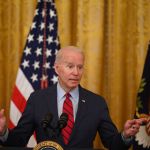
Vice President Biden and Health and Human Services Secretary Kathleen Sebelius will talk health care at a Middle Class Task Force meeting at 1:30 p.m. ET, specifically about how "health care reform will lower costs, cut waste and improve quality for seniors from across the country," according to the White House.

Obama was also holding meetings with Sen. Olympia Snowe (R-ME) and Sen. Ben Nelson (D-NE).

After the meeting, Snowe told ABC that "We shouldn't be restrained by an artificially compressed timeline."

But just a few minutes ago, in an interview with Andrea Mitchell, she said she hopes they can commit to something before the August recess.


3 Comments

| Leave a comment
user-pic

Be careful what you ask for Mr. President

Senate Finance Committee Chairman Max Baucus (D-Mont.) said Thursday that he hopes to have a bipartisan deal on a health care reform bill by the end of the day. Read more: http://www.politico.com/news/stories/0709/25031.html#ixzz0LRhaEcNy
user-pic

I am on board with the two ideas, the one suggested by the President Obama: Based on a new report that details how much waste and inefficiency there is in medicare, how best practices are not always used, how many billions of dollars could be saved, the independent groups of doctors and medical experts to oversee long-term cost saving measures every year force congress to make sure that they are acting on these recommendations to bend the cost curve each and every year.
The other idea echoed by New York Times;
"Meanwhile, it will be important to get some guaranteed fast savings from the health care industries by cutting and reallocating hundreds of billions of dollars from projected spending on Medicare and Medicaid...Just to be sure, Congress ought to establish a fail-safe mechanism that could impose additional cuts after a few years if savings are less than projected."
I agree that In the near-term, this type of accountability will ensure that health reform legislation is fiscally responsible and fully financed. In the long-term, it will make certain that our health system, especially Medicare, is sustainable for generations to come. Please visit http://www.newamerica.net/blog/new-health-dialogue/2009/health-reform-finding-trigger-points-controlling-costs-13089 for further details.
Thank You !

user-pic

This spring, due to the demand decrease, the highest fuel price came down below $40 per barrel, though, the 'similar' insurance premiums still go on rising, which may imply that health care is not optional, but essential, and the inaction could bankrupt family, business, and government beyond this recession, as all across the board agree.
Earlier, the revised HELP BILL with the public option and employer mandatory has got a green light from the CBO, yet still, a new 'incomplete' analysis of emerging House legislation said it would increase deficits by $239 billion over a decade.
But, CBO does not score any savings from prevention / wellness and the rest, even as Prevention / Wellness is an actual and essential part of the savings, without which the reform would be meaningless.
And I think the other things such as increased productivity / consumer confidence, 'potential stem cell effect', 'decreased mental stress', and 'massive job creation', 'stock price effect' and etc considered, the reform might be within reach. Most importantly, a few years later, if the excessive war and military spending goes toward the health care program, the cost issue does not matter at all, I think.
Edward M. Kennedy argues, the perfect should not be the enemy of the good, "Everyone won't be satisfied and no one will get everything they want. But we need to come together, just as we've done in other great struggles in World War II and the Cold War, in passing the great civil-rights laws of the 1960s, and in daring to send a man to the moon. If we don't get every provision right, we can adjust and improve the program next year or in the years to come. What we can't afford is to wait another generation."

Thank You For Reading !

Leave a comment

Advertisement
Please disable your adblocker!
Ads are how we pay the bills!

Subscribe

Josh
Marshall

Bio

Matt
Cooper

Bio

Eric
Kleefeld

Bio

Brian
Beutler

Bio

Advertise Liberally
Share
Close Social Web Email

"To" Email Address

Your Name

Your Email Address