TPMDC
« Schumer Says Reconciliation Still An Option, Confident That Public Option (Or Something Like It) Will Prevail | Home | McCain Opposes Sotomayor, Attacks Her As Activist Judge »

August Recess: A Breakdown Of The Health Care Fight Ahead

If you've been paying attention to the political fight over health care reform, you've likely heard something or other about the importance of the August recess. Politicians will be making the case for or against reform. Activists will be supporting and opposing them. Interest groups will be muddying the waters in various ways and turning up the heat on members they hope to influence. It can be so confusing!

So here's what you need to know. Below, I've broken down August activities and events by venue. Key politicians, and outside groups, will take to districts and states, newspapers and airwaves, and backroom meetings to influence reform over while Congress is in recess. And you'll probably have to crawl in a hole for the rest of summer if you want to escape the coming flurry of activity.

IN THE FIELD

  • Members of the House and Senate will be hosting town hall events, conducting media availabilities, and meeting with key stakeholders in their districts and across their states. According to a memo sent to House Democrats as they prepared to depart on Friday, "[e]ach week, a national event will be organized to highlight...progress on health insurance reform. Events will range from a Committee field hearing, a DC-based press event, or events in Members' districts with Leadership or Committee Chairmen."

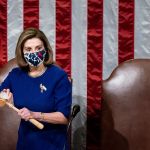
    At those events, members will be armed with an index card produced by Speaker Nancy Pelosi--a cheat sheet of sorts to keep them on point about what, specifically, their constituents have to gain from Democratic health care reform efforts.

  • President Obama's political arm, Organizing for America, will be canvassing and hosting rallies across the country. There are hundreds of events on the calendar, with many yet to be scheduled. Though they're not quite there yet, OFA will have paid field staff organizers in all 50 states to supplement the work of volunteers and organizers from outside groups.
  • Those outside groups will almost invariably fall under the umbrella of the campaign Health Care for America Now. HCAN has 120 organizers in 44 states--all except for Alabama, Alaska, Kentucky, Mississippi, South Carolina, and Vermont--who will ramp up their efforts significantly in August. They'll host "thank you events" for members of the three House committees--Education and Labor, Ways and Means, and Energy and Commerce--that voted to advance health care legislation, and for those members who've tried hardest to prevent the bill from being weakened. Their message will echo the message coming from reform-oriented members, focused on the role the insurance industry has played in fighting reform, and on the many ways reform can benefit not just the uninsured, but the overwhelming majority of constituents. HCAN will target obstructionist members, and fence sitters--some of whom should expect to be bird-dogged by pro-reform activists--and will be pressuring senators to support the Senate HELP committee's reform bill.
  • These efforts will be countered by the both grassroots and astroturf efforts of reform opponents, including a two-week long, cross-country tour of the Tea Party Express, supported by Our Country Deserves Better PAC. Separately, the well-funded conservative interest group Americans for Prosperity, which has been the font of a great deal of teabagging activity, will be hosting almost daily events--often more than one a day--in key states across the country. On August 22--the same day HCAN plans a major national canvassing effort--expect a co-ordinated nation-wide anti-reform tea party bonanza.
  • That will please industry groups like America's Health Insurance Plans, who, according to the Wall Street Journal, "has stationed employees in 30 states who are tracking where local lawmakers hold town-hall meetings."

  • For their part, the U.S. Chamber of Commerce will be hosting events at town halls and rallies to kill the public option in five key states: Louisiana, Arkansas, Colorado, Maine, and North Carolina.

ON THE AIRWAVES AND IN PRINT

If you've already tired of all the pro- and anti-reform TV ads, you're likely to be driven mad this month. Expect more ads, and for those ads to be somewhat harsher. To get a feel for just what to expect, here are some key examples.

  • HCAN, will up its ad buys--which include "thank you" ads, ads encouraging waffling members to support reform, and ads attacking the opposition--and will recycle some old favorites.

  • Their foil--an establishment-friendly voice of reform opposition--is the U.S. Chamber of Commerce. They recently launched a $2 million print ad buy opposing a tax on employer-sponsored health care benefits.

    They tentatively support the Senate Finance Committee's slow-moving, bipartisan health care reform negotiations--i.e. a process that does not mandate employer-sponsored health care, and that eschews a public option. But they'll be continuing their opposition to the other Senate proposal, and the legislation coming together in the House of Representatives.

  • On the anti-reform fringe, but not without their supporters or wealthy funders are groups like Americans for Prosperity, whose offshoot group Patients Untied Now has already run this segment nationwide.

    And it's these sorts of ads that may do the most damage, simply because they contain the most damaging misinformation. For better or worse reformers don't have an equal but opposite agit-prop outfit, so they can react to the misinformation, and pull back the veil on the groups fronting it, but that's about it.

THE INSIDE GAME

Harder to describe, but at least as important as what goes on in the open is what goes on behind closed doors. Industry groups and pro-reform groups alike will descend upon members to make sure their views are reflected in the final bill. America's Health Insurance Plans, for instance, is on board with reform, and says so publicly--if somewhat unenthusiastically.

But behind the scenes the group is lobbying to kill the public option. Other industry groups like PhRMA are playing a similar role--part of the White House's reform coalition, but also fighting to make sure it reflects their interests. In that sense, it's important to keep an eye on their public statements and activities--a barometer, of sorts, for their level of support, and, by inference, for the shape reform legislation is likely to take in the end.


8 Comments

| Leave a comment
user-pic

Look, I don't know if the rest of you are as fed up as I am with the obstruction and political game playing going on with this health care reform...but I DO know this - the Republican obstructionists and the Blue Dog Dems have absolutely NO clue what the rest of us are going through with healthcare. Maybe it's time they did!

If you agree, please sign the petition below, and forward it - any way you can - to anyone and everyone you know! Time to let them know how we feel!!!!

http://www.petitiononline.com/PubOp676/petition.html

user-pic

Our job is to get a bill

Our opponents aren't Blue Dogs..our adversaris are Teabagging Birthers

user-pic

Any small group of thugs can disrupt an open venue. The only way to counter this is to pack the house with people who can shout them down. Without that, changing the venue to media or online chat venues may be the tactic to take.

user-pic

Some may have missed it what with all the angst und sturm und drang over Waxman and the Blue Dogs, but the Tea Baggers and the Birthers....they are on the march to a Congressional Town Hall near you

Brown Shirt 101

http://my.barackobama.com/page/content/reportback?source=feature

user-pic

The primary goal is to get through this next awful month and give the brownshorts as good as they put out at these meetings, then get the bill passed in fall.

Their arguments are ridiculous on their face - if a reform bill is singed into law this year, next year people will realize that everything turned out fine and these clowns disrupting meetings were stupid and wrong.

I hope these jerks will unify the pro-reform side - we can win this, and it will do much to improve the cause of all progressives for the future if we do.

user-pic

You ignore the biggest story: Pelosi promised a floor debate and vote on single payer next month. Drop everthing else until then and lean on your own Representative to vote for it.
Cynics claim there's no support: but any Dem can vote for it and then say it failed so I voted for the wishy washy version of public option.

Anyway, smoke 'em out if you're serious about health care.

user-pic

Science Key To Recovery !

1. The pay for 'Outcome' pack is most likely to expedite the introduction of Health Care IT SYSTEM.

2. The synergy effect of combined Health Care IT & a pay for 'Outcome' SYSTEM may enable the clinicians to correctly diagnosing and effectively treating a patient earlier in the process so that it can measurably scale back the crushing lawsuits and deter the excuse for unnecessary cares to make fortunes.

3. In modern society, 'medical institute' and 'energy arena' is the only arena that is not retrofitted with 'a must' , and what happens if the financial institutes lack the IT SYSTEM ? . It is believed that over the duration of two wars, computer IT has not expanded the progress to 'electronic medical records' & ' smart grid technology' . With them in place, people all around the globe might have avoided this tragic recession.

4. The Mayo Clinic medical practice has embarked on the first widely available e-health information service for patients on Microsoft's HealthVault service.

Through Mayo Clinic's network, users of its health-care services can keep up to date with their health information and information for family members, and receive health guidance and recommendations from Mayo that is optimized for each person.

The system also allows patients to upload information from home-health devices such as blood glucose monitors and digital scales. Patients can authorize whether they want to share their health information with doctors or other caregivers, and those caregivers can provide health-care and general wellness recommendations based on the information patients provide.

Thank You !

user-pic

The 'innovative' idea of a 'pay for value / outcome' pack came after the CBO had previously pointed out this health care reform wouldn't work without 'fundamental' change in the out of date system. It is said that as much as 30 percent of all health-care spending in the U.S. -some $700 billion a year- may be wasted on tests and treatments that do not improve the health of the recipients, and this 700 billion dollars a year can cover a lot of uninsured people.

The expected Benefits of this 'innovative idea' are as follows ;

1. Meet the objective of revenue-neutral.
Supporters of the agreement say it could save the Medicare System more than $100 billion a year and 'improve'
care, that means more than $1trillian over next decade, and virtually needs no other resources including tax on the
wealthiest. Supposedly even the 'conservative' number of such savings might be able to meet the objective of
revenue-neutral.

2. Quality and affordability.
If you are a physician, and your pay is dependant upon your patient's outcome, you will most likely strive to
prescribe the best medicine earlier in the process, let alone skipping the wasteful, unnecessary treatments.

3. No intervention in decision-making.
The innovative idea of 'a pay for outcome' will more likely prompt team approach and decision, as at Myo clinic.
Under the 'pay for outcome' pack, for good reason, best practices as 'recommendations' would simply help them
make a better decision, and the government won't still have to meddle in the final, actual decision-making
process as a non-expert.

4. Speed up the introduction of IT SYSTEM.
The pay for 'Outcome' pack is most likely to expedite the introduction of Health Care IT SYSTEM.
The synergy effect of the combined Health Care IT & a pay for 'outcome' system may allow the clinicians to
'correctly' diagnose and effectively treat a patient earlier in the process so that it can measurably scale back the
crushing lawsuits and deter the excuse for unnecessary cares to make fortunes.

5. Accelerate the progress in medical science, in return, it saves more cash.

6. Settle the regional disparity.

7. Reduce the emergency room visits & save immense costs.
Public health insurance plans such as Medicare and Medicaid paid for more than 40 percent of U.S. emergency
room visits in 2006, according to government figures released recently. Many experts say reducing these hospital
visits would be an important way to lower the enormous, and growing, expense of U.S. health care.

Thank You !

Leave a comment

Advertisement
Please disable your adblocker!
Ads are how we pay the bills!

Subscribe

Josh
Marshall

Bio

Matt
Cooper

Bio

Eric
Kleefeld

Bio

Brian
Beutler

Bio

Advertise Liberally
Share
Close Social Web Email

"To" Email Address

Your Name

Your Email Address