Health care reformers have a number of arguments for the public option, but the main one is this: that by injecting fairness and competition into the market the public option will lower premiums for everybody, including those paying for private plans. Unfortunately, a new CBO study finds that it may not have that effect at all.
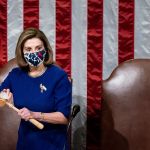
The theory behind the public option is that, by injecting a major non-profit insurer into the marketplace, it will force private competitors to cut down on administrative waste and other excesses, and, therefore, drive premiums down for everybody. Last week, when House Speaker Nancy Pelosi was on the verge of losing the fight for a muscular public option, she said "There's no philosophical difference between a robust public option and negotiated rates. It's just a difference in money."
But is that true? Yesterday, in an analysis of House health care legislation, the CBO concluded that the six million people expected to enroll in the public option by 2019 will be paying, on average, higher premiums than will people buying private plans.
"[A] plan paying negotiated rates would attract a broad network of providers but would typically have premiums that are somewhat higher than the average premiums for the private plans in the exchanges," wrote CBO chief Doug Elmendorf.
The rates the public plan pays to providers would, on average, probably be comparable to the rates paid by private insurers participating in the exchanges. The public plan would have lower administrative costs than those private plans but would probably engage in less management of utilization by its enrollees and attract a less healthy pool of enrollees. (The effects of that "adverse selection" on the public plan's premiums would be only partially offset by the "risk adjustment" procedures that would apply to all plans operating in the exchanges.)
Two things are happening here. The first is that private insurers will continue to game the system, by cherry picking for healthier customers.
"The House bill does a very good job of setting up rules restricting cherry picking," says Edwin Park, a senior fellow at the Center for Budget and Policy Priorities. But, he adds, "private insurers have years of experience gaming rules," and will continue to do so.
"Insurers, just in terms of how they do outreach, how they market, are still going to be able to cherry pick," Park says.
The second is that the public option will just be a gentler creature--it won't erect as many restrictions on available providers and services as its private competitors will, and that's likely to attract riskier consumers.
Overall, the impact of both phenomena is that, on average, sicker people will be drawn to (or nudged toward) the public plan, and, to be actuarially sound, it will have to raise its premiums.
The House bill does quite a bit to correct for these effects--it mandates that plans offer a minimum benefits package, and sets up a system of "risk adjustment", to force insurers that cover relatively healthy people to help offset the cost of covering sick people. But, as CBO's findings indicate, these provisions will probably not be enough.
This was the basis of the argument for tying the public option's payment rates to Medicare's. Not only would the public option save money on administrative costs, it would save yet more money by paying less to providers.
"The idea has always been that if the public option were able to save on administrative costs and provider rates, that it would be able to provide more competition," Park says.
So does that mean that the public option is superfluous? If it's just a separate, but unequal insurance plan for people who need a lot of medical care, and won't put downward pressure on premiums in the private market, what's the point? Well, it's possible that without the public option, these same, sick people would be paying yet more still. Additionally, as the insurance exchanges grow to include a broader, healthier segment of the population, the mix of people will be healthier, and the public plan's negotiating power will increase. But it's certainly a weaker animal than it could have been.
Park says the best hope for reform is to create strong regulations and a strong public option, and the worst hope for reform is to create weak regulations and no public option--and that the House performs much better on this score than the Senate does. But was Pelosi right? That there's no philosophical (or, at least, theoretical) difference between a public option that sets rates, and a public option that negotiates them? This CBO report suggests otherwise.
VictorLH
October 30, 2009 2:25 PM
This is a good argument for opening the "Public Option" to the entire population. As the bill stands now, it is only available to a few. Note, those with existing employer plans must stay with those no matter what the cost of those plans is, i.e. they do not have the option of going to the exchange or the public option. Fact is this Bill looks like a protect the Private Insurance Industry Profits Bill
Reply | Flag Abuse
Are you sure this comment violates TPM's Terms of Service?
mans_best_friend
October 30, 2009 2:28 PM in reply to VictorLH
A large majority of people with employer plans would not go with a public plan if offered for two simple reasons:
1. The employer plan is usually going to be better.
2. The employer plan is partially paid by the employer, and so less expensive to the consumer.
Reply | Flag Abuse
Are you sure this comment violates TPM's Terms of Service?
VictorLH
October 30, 2009 2:33 PM in reply to mans_best_friend
Really? If the employer said, here's what I will contribute for a Health Care Plan if you want to use the the exchange or you can stay on the company plan and pay this amount - that wouldn't work?
My orginal point is, if the entire population does not have access to all plans there will not be a level playing field and thus costs will be skewed.
Reply | Flag Abuse
Are you sure this comment violates TPM's Terms of Service?
mans_best_friend
October 30, 2009 2:46 PM in reply to VictorLH
No, it wouldn't work. No employer is going to do that because he risks healthy people going with cheaper coverage elsewhere, leaving him with the most expensive employees to cover.
In the ideal case, everyone would have access to the public plan, but if they don't to start out it's not that big a deal. The first objective ought to be to get coverage to those who currently don't have it and can't get it at affordable rates. Over time it's inevitable that everyone will have access, but first things first.
Reply | Flag Abuse
Are you sure this comment violates TPM's Terms of Service?
mcc
October 30, 2009 2:57 PM in reply to VictorLH
I think the public option is still of great worth despite this, because of its function of "insurer of last resort". The public option is still useful for people in some situation that would lead them to get screwed over by the for-profit insurance companies. The problem is that it's now of much less use to someone who just wants an insurance plan.
This demonstrates why the decision to give up on the "robust" public option is questionable. Nate Silver's been claiming for weeks that a "robust" public option with a trigger would be better than a leveled-playing-field public option without.
Reply | Flag Abuse
Are you sure this comment violates TPM's Terms of Service?
mcc
October 30, 2009 3:07 PM in reply to mcc
This was intended to be a top-level post, it has nothing to do with victor's post.
Reply | Flag Abuse
Are you sure this comment violates TPM's Terms of Service?
kenga
October 30, 2009 3:00 PM in reply to mans_best_friend
I'm not sure I follow the logic in 1. My employer struggled this year to maintain coverage, and keep the newly implemented deductibles from being crippling. They did a lot better than that of other local employers.
Which is to say that employer-based plans are generally costing more and delivering less and all indicator suggest that trend will accelerate.
For 2. the public plan will be more affordable when employees get a raise because the employer is no longer paying that portion of their compensation as benefits.
I.e.:
"Would you prefer:
- more pay and have to buy your own insurance
- less pay and your employer buys your insurance as long as you're employed by them."
Reply | Flag Abuse
Are you sure this comment violates TPM's Terms of Service?
mans_best_friend
October 30, 2009 3:10 PM in reply to kenga
"For 2. the public plan will be more affordable when employees get a raise because the employer is no longer paying that portion of their compensation as benefits."
HAHAHAHAHAHAHAHAHAHAHAHAHAHAHAHAHA
Wait, I'm almost done.
HAHAHAHAHAHAHAHAHAHAHAHAHAHAHAHAHAHA
You can't be serious.
Reply | Flag Abuse
Are you sure this comment violates TPM's Terms of Service?
kenga
November 20, 2009 4:25 PM in reply to mans_best_friend
"He was a wapist!"
"And a wobber!"
"And a pickpocket"(annoyed shouts at the speaker)
.
.
.
Hypothetically, it could happen. An economist told me so.
Reply | Flag Abuse
Are you sure this comment violates TPM's Terms of Service?
onceler
October 30, 2009 4:37 PM in reply to mans_best_friend
not really. people with employer plans are simply not eligible for the public option in the first place.
and, really, why are you pretending to have any idea whether they would be better plans or not? truth is you have no idea.
Reply | Flag Abuse
Are you sure this comment violates TPM's Terms of Service?
Bruce Webb
October 30, 2009 7:07 PM in reply to onceler
Sir you are wrong. Look up the definition of "Exchange Eligible Employer" "QHCBP or Qualified Health Care Benefit Plan" and the rules under "Transition".
The notion that employers are locked out of the PO is very wide spread, it is also not supported by the language of either the original HR3200 or the new HR3962. Or you can cite page, section and line to prove me wrong. The CW on this from the left, particularly from the Wyden camp, seems to derive more from a wish to push HR676 or its Wyden counterpart than in any fair reading of either HR3200, the HELP Bill or the new HR3962.
I took the time in July and now again this week to make an independent reading and assessment (something I learned to do a decade plus ago on Social Security). Don't assume you 'know' what you think you know. Even if you trust the source. My first post on this at our blog yesterday was called "Read the Bill!". Which is still excellent (if largely ignored) advice.
Reply | Flag Abuse
Are you sure this comment violates TPM's Terms of Service?
Bruce Webb
October 30, 2009 6:43 PM in reply to VictorLH
The notion that the PO is limited to a 'small sliver' of the US population and that people in employer plans are locked in is pretty pervasive, and among powerful policy and opinion makers. It is also not supported by the bill language.
People have gotten themselves confused over the concept 'eligible' and 'enrolled'. CBO projects that by 2019 a relatively small number of people will be enrolled in the PO even though almost everyone in the
country is an 'exchange eligible individual'
HR3968 allows any employee offered coverage to opt out of the employer plan and sign up for an Exchange Plan, including the PO, moreover the employer has to make a contribution to cover part of the premium. Further by 2015 almost all employers would be eligible to purchase Exchange group plans, once again including the PO. There is a provision by which the Commissioner could block or meter entry by 'Largest employers' but no convincing explanation why they would actual exercise the block.
CBOs score of HR3200 in July and HR3968 yesterday seem to start from the assumption that private insurers will actually play nice and actively attempt to compete on price and service. Well nobody I know believes those insurers will really trade margin for volumein ways that would keep their premiums below those of the PO. Far more likely in my view is that we will see a repeat of the HMO movement and an abandonment of rural and less affluent suburban markets leaving the PO the only option for
'smallest', 'smaller', and 'small' employers (as defined) who want to meet their Employer Responsibility (see Sec 402) by providing group insurance.
I could be wrong, and given the caliber of the people who are pushing the 'small sliver' 'locked out of the PO by my employer insurance' by rights I should be wrong. On the other hand the 'discovery' by FDL that the new bill opens the Exchange potentially to all employers by 2015 was already a feature of HR3200 back in July.
So I suggest dropping CW here and consulting the actual text of the bill.
It may not be economically least cost to opt out of employer coverage and enroll in an individual plan, and that is how CBO is calling it, but the idea that you are locked out seems an urban myth.
Got code?
Reply | Flag Abuse
Are you sure this comment violates TPM's Terms of Service?
mans_best_friend
October 30, 2009 2:26 PM
Something about this doesn't wash. If private insurers are required to accept all applicants at community rates and their rates are lower, then why will "sicker people will be drawn to (or nudged toward) the public plan". Wouldn't they choose the cheaper private plans?
Reply | Flag Abuse
Are you sure this comment violates TPM's Terms of Service?
Xantar
October 30, 2009 2:41 PM in reply to mans_best_friend
The argument seems to be that even though the insurance industry will not be allowed to discriminate based on pre-existing conditions and can no longer practice rescission, they'll find some way to deny care to people they really don't want to cover.
The other angle is that insurance companies may agree to cover sicker people who need more health care but will set premiums at some prohibitively expensive rate (as far as I know, there are no price controls in any of the bills). Therefore, these people will go to the Public Option for a much lower rate and the premiums for the Public Option will be higher than those of the private insurance companies who have healthier customers.
Reply | Flag Abuse
Are you sure this comment violates TPM's Terms of Service?
mans_best_friend
October 30, 2009 2:51 PM in reply to Xantar
I believe all the currently considered bills use community rating, meaning insurance companies can't charge more for some people than others based on anything except age, and the ratio between the highest and lowest is capped at 2:1 or 5:1 depending on which of the various bills you're talking about.
Reply | Flag Abuse
Are you sure this comment violates TPM's Terms of Service?
Tanjaoui
October 31, 2009 8:00 AM in reply to mans_best_friend
That's the ratio between highest and lowest, so you're right...but they can still raise rates by 10 or 20% every year if they want.
Reply | Flag Abuse
Are you sure this comment violates TPM's Terms of Service?
Stroszek
October 30, 2009 2:58 PM in reply to mans_best_friend
They can't discriminate but they can constantly throw an obstructing bureaucracy in your face whenever you get seriously ill.
Reply | Flag Abuse
Are you sure this comment violates TPM's Terms of Service?
Xantar
October 30, 2009 3:58 PM in reply to Stroszek
That's a good point, and I hadn't thought of that.
I think basically Edwin Park's analysis was premised on the assumption that insurance companies will do their very best to screw over their customers and that they will be able to find some way to do it even if we can't think of it right now. And I think that's a pretty safe assumption.
Reply | Flag Abuse
Are you sure this comment violates TPM's Terms of Service?
Bruce Webb
October 30, 2009 6:51 PM in reply to Xantar
There are strict limits on what coverage private plans can deny which are set externally. Under the bill the days of companies arbitrarily saying "we don't cover that" or "WE consider that experimental" or "sorry that would put you over your annual/lifetime limit" are DONE. In general their freedom to screw you over just because they feel like is limited.
Reply | Flag Abuse
Are you sure this comment violates TPM's Terms of Service?
Tanjaoui
October 31, 2009 8:02 AM in reply to Bruce Webb
That's progress. On they other hand, they'll find ways to game the legislation so they can continue to cherry pick healthy patients. They can get very creative. It's all part of their profit driven mission.
Reply | Flag Abuse
Are you sure this comment violates TPM's Terms of Service?
Brian Beutler
October 30, 2009 4:05 PM in reply to mans_best_friend
The theory is that, within the bounds of what's required by them under the new law, private insurers will skew what services they cover to appeal to healthy people (gym memberships vs. chemotherapy, as an extreme hypothetical) and use their admin dollars to market to young individuals.
It's CBO modeling, but policy experts have believed this to be the case for sometime based on similar analyses. I suppose it's possible that unexpectedly large numbers of people will ignore the numbers and pick the public plan as a sort of protest, thereby leveling the playing field. But I'm pretty sure that can't be modeled by CBO, which assumes 'rational' actors, etc.
Reply | Flag Abuse
Are you sure this comment violates TPM's Terms of Service?
mans_best_friend
October 30, 2009 4:37 PM in reply to Brian Beutler
Simple solution: Require ALL insurance policies to cover at minimum what the PO covers. I thought minimum standards were already in the bill, and it's hardly a radical concept.
Reply | Flag Abuse
Are you sure this comment violates TPM's Terms of Service?
Indie Pro
October 30, 2009 4:39 PM in reply to mans_best_friend
not at all, a good idea!
Reply | Flag Abuse
Are you sure this comment violates TPM's Terms of Service?
Bruce Webb
October 30, 2009 7:19 PM in reply to mans_best_friend
Yes it is already in the bill and has been from Day 1.
By year five all new individual and all group plans will have to meet the affordability, access, and coverage standards to meet those of a QHCBP, i.e. an Exchange Eligible Plan. Within limits if you have a crappy but cheap individual or family plan it is grandfathered in. And if you want to sign up new dependents you can. (Bad Dad!). But ultimately coverage requirements will be normalized between public and private plans.
Reply | Flag Abuse
Are you sure this comment violates TPM's Terms of Service?
Tanjaoui
October 31, 2009 8:12 AM in reply to Bruce Webb
Really? I've read the opposite, and that in an attempt to woo Snowe, they ditched the possibility for states to negotiate with plans that want to be admitted to exchanges on premium costs and standards of coverage and customer service. So you're saying that made Reid's cut in the merged bill?
Reply | Flag Abuse
Are you sure this comment violates TPM's Terms of Service?
tosh
October 30, 2009 2:38 PM
This is why people were pushing Medicare + 5% with Rural Adjustments. We all know that Big Health would game a Negotiated Rate.
John
Reply | Flag Abuse
Are you sure this comment violates TPM's Terms of Service?
willia451
October 30, 2009 2:52 PM in reply to tosh
Agreed. This has less to do with what the best PO for the nation would have been, from the standpoint of cost, deficit reduction, and choice, as it does electability for the blue dogs. The "Robust PO" = "govt takeover" taking point for Republicans. The "Negotiated Rates" PO, not so much.
Next, the blue dogs will want the "Negotiated Rates" PO to be independent; i.e. not administered by HHS. If this weakened PO survives at all out of conference.
Which is still not a done deal by any means.
Reply | Flag Abuse
Are you sure this comment violates TPM's Terms of Service?
ericf
October 30, 2009 2:43 PM
It seems they're guessing at the behavior of a lot of people whose behavior vcan't be guessed at, especially since we don't yet know for sure just how it's going to work. Also, ideologically, a lot of people will refuse to use the public plan even if it's the better choice, while some of us who believe strongly in a public plan will choose it if we possibly can, even if a private plan is cheaper. I for one would pay more for the public plan not just to support it, but so I don't have to wonder how much I can trust my private insurer. How can predictions include those sorts of factors?
Reply | Flag Abuse
Are you sure this comment violates TPM's Terms of Service?
ericf
October 30, 2009 2:45 PM in reply to ericf
Just an addendum, the logo of my insurer, Anthem, was spotted on the clothing of people organizing the disruption of one of the public forums. So if I have the choice of switching, I probably will, even if my monthly premium is higher.
Reply | Flag Abuse
Are you sure this comment violates TPM's Terms of Service?
Progressive Party
October 30, 2009 2:53 PM
Folks if you think this is new news...just wait until the reality of people being mandated to purchase private insurance as their premiums will be increased and revieve shitty coverage mandated by thier democratic congress. Fines for refusal to purchase private insurance who will still be making huge profits...george orwell would call this reform!
Reply | Flag Abuse
Are you sure this comment violates TPM's Terms of Service?
mans_best_friend
October 30, 2009 2:59 PM in reply to Progressive Party
Will the PO cover head injuries? Because I hear the sky is falling.
Reply | Flag Abuse
Are you sure this comment violates TPM's Terms of Service?
lousgirl84
October 31, 2009 11:27 AM in reply to mans_best_friend
Good response. Loved it.
Reply | Flag Abuse
Are you sure this comment violates TPM's Terms of Service?
erica
October 30, 2009 3:13 PM
I guess if I had the choice between a higher cost public plan that wouldn't jerk me around or drop me if I got sick, and a private plan that might, I'd take the public option.
If an employer were willing to pick up part of the cost, then of course that would sweeten the deal for me and it might be worth the risk to take a private plan.
Will employers be able to offer to share public-option premiums with their employees?
"Hey, I'm not into administering a whole health plan for my company, but if you want to pick up the government health plan (or some other individual private plan) I'll reimburse you for half your monthly premium up to x dollars as long as you work for me."
This would be helpful for employers.
Reply | Flag Abuse
Are you sure this comment violates TPM's Terms of Service?
mcc
October 30, 2009 3:18 PM in reply to erica
The public option is available as part of the "insurance exchange". As I understand the idea is that your employer can choose to insure its employees through the exchange. If your employer chooses to get insurance through the exchange, they will agree to contribute a certain amount toward a plan and you will be individually allowed to pick which plan on the exchange to go with specifically. One of these plans will be the public option.
The exchange is only available to small businesses and individuals who otherwise lack insurance. If you are working at a large business, you will not be able to use the exchange and you will not be able to use the public option at all.
Reply | Flag Abuse
Are you sure this comment violates TPM's Terms of Service?
Bruce Webb
October 30, 2009 7:42 PM in reply to mcc
No. At best a quarter correct. Read and need the "Transition" language. It is possible that not every "larger employer" will be Exchange Eligible by 2015 but most should be and the rest will be in that category where it makes more economic sense to self-insure.
Reply | Flag Abuse
Are you sure this comment violates TPM's Terms of Service?
Bruce Webb
October 30, 2009 7:32 PM in reply to erica
Yes.
Employers can offer the PO as an alternative. And even if they don't individual employees can opt-out of employer supplied choices and get a mandated subsidy. There are explicit protections in the bill to prevent steering of high cost/low wage employees to the Exchange/Public Option or offering Cadillac Plans to selected employees. Additionally there is a phased in 'Transition' that meters the admission of first 'smallest' then 'smaller' then 'small' employers eligibility to offer an Exchange Plan (including the PO) but by 2015 we can expect almost all employers to offer the PO as an option.
Reply | Flag Abuse
Are you sure this comment violates TPM's Terms of Service?
bobatkinson
October 30, 2009 3:31 PM
How in the world can part of the deal be to lower Medicare payments to doctors when they are already so low that, at least here in Alaska, doctors are already refusing new Medicare patients? What am I missing here? The solution truly seems to be more along the Wyden amendment lines so that we all have the ability to opt in to the exchanges and create an enormously competive pool.
Reply | Flag Abuse
Are you sure this comment violates TPM's Terms of Service?
Stroszek
October 30, 2009 3:34 PM in reply to bobatkinson
What are you talking about? What deal?
Reply | Flag Abuse
Are you sure this comment violates TPM's Terms of Service?
Bruce Webb
October 30, 2009 7:47 PM in reply to Stroszek
The payment cuts are not to Doctors who under the original House Deal would actually have gotten a $245 billion ten-year boost but instead to providers of certain types of custodial care not actually covered by Medicare. Details are important here.
Reply | Flag Abuse
Are you sure this comment violates TPM's Terms of Service?
mcc
October 30, 2009 3:34 PM in reply to bobatkinson
Where are you seeing the thing about lowering medicare payments to doctors?
Reply | Flag Abuse
Are you sure this comment violates TPM's Terms of Service?
mans_best_friend
October 30, 2009 4:30 PM in reply to mcc
I recall seeing an article recently about the government cutting some Medicare reimbursement rates, which predictably has a lot of doctors pissed off. But it's totally unrelated to the Health Care bill.
Reply | Flag Abuse
Are you sure this comment violates TPM's Terms of Service?
Tanjaoui
October 30, 2009 4:46 PM in reply to bobatkinson
Wyden bill...Yes. Key.
Reply | Flag Abuse
Are you sure this comment violates TPM's Terms of Service?
Tanjaoui
October 30, 2009 3:48 PM
"The House bill does quite a bit to correct for these effects--it mandates that plans offer a minimum benefits package, and sets up a system of "risk adjustment", to force insurers that cover relatively healthy people to help offset the cost of covering sick people. But, as CBO's findings indicate, these provisions will probably not be enough."
...Why won't they be enough? This is important, otherwise there's no 'level playing field'. Private plans will make sure they get healthier patients, making the public plan a dumping ground for sicker, older patients.
Reply | Flag Abuse
Are you sure this comment violates TPM's Terms of Service?
bobatkinson
October 30, 2009 4:25 PM
Was just confused about lowering the rates paid to Doctors down to what the Medicare rates are already I guess. Still those rates are so low in Alaska that doctors are refusing patients and facing a 21% further cut come January unless the "temp fix" provision is initiated again.
Reply | Flag Abuse
Are you sure this comment violates TPM's Terms of Service?
onceler
October 30, 2009 4:36 PM
What about the savings on administrative costs? THAT was the main area where we were going to see savings on the public plan, wasn't it? That and rates being tied to Medicare, together, were supposed to make a cheaper plan. Oh yeah, that and the fees the PO wouldn't have to pay for lobbying, PR, lawyers, etc.
This sounds like pretty much 100% bull to me. And really, only 6 million on the plan by 2019? What kind of silly person would make an estimate like that? Well, it will be fun to watch all these "experts" be proven wrong, yet again. It always is.
Reply | Flag Abuse
Are you sure this comment violates TPM's Terms of Service?
Indie Pro
October 30, 2009 4:42 PM
it'll only get worse from here.
Reply | Flag Abuse
Are you sure this comment violates TPM's Terms of Service?
OldenGoldenDecoy
October 30, 2009 5:26 PM in reply to Indie Pro
Whewww . . .
What's that smell of ammonia hanging in the air?
~OFD~
Reply | Flag Abuse
Are you sure this comment violates TPM's Terms of Service?
willia451
October 30, 2009 7:22 PM in reply to OldenGoldenDecoy
Would you two cease fire? Please don't make this personal. That's not going to help.
We're going to need all hands on deck. Whether we all agree completely with one another or not.
Reply | Flag Abuse
Are you sure this comment violates TPM's Terms of Service?
lousgirl84
October 31, 2009 11:31 AM in reply to Indie Pro
seems like you like to piss a lot of people off in here. For someone who blames others for picking fights, you seem to do pretty well all on your own.
Reply | Flag Abuse
Are you sure this comment violates TPM's Terms of Service?
Weeferdog
October 30, 2009 4:49 PM
So will you, Indie Pro. That's one thing we can count on.
Weeferdog
Reply | Flag Abuse
Are you sure this comment violates TPM's Terms of Service?
TaosJohn
October 30, 2009 5:01 PM
These old rich white bastards morseling out crumbs to the people while stealing all they can get for their friends have no freaking idea how deep the suffering and anger out here is. I go on Medicare next year if they don't screw that up, too, and I'll have my first physical in a dozen years. I could be a walking dead man, who knows?
This is the only country in the civilized world that lets people die because they can't pay. THE ONLY ONE. Is that the kind of distinction that makes America proud?
Reply | Flag Abuse
Are you sure this comment violates TPM's Terms of Service?
OldenGoldenDecoy
October 30, 2009 5:06 PM
Does anyone realize the following?
As posted in my Cafe blog this past Tuesday:
Just another little tidbit there that hasn't come to light with all the spin and spew.
And ... to see what the other mark-ups of the various bills (Senate Finance, Senate HELP bill, House Ways and Means) would cost, go to the following calculator and run your personal data.
http://healthreform.kff.org/SubsidyCalculator.aspx
I hope this helps you with seeing where all this may possibly be leading.
There's a whole crap load of hoops to jump through before any of this comes to pass.
~OGD~
Reply | Flag Abuse
Are you sure this comment violates TPM's Terms of Service?
TheraP
October 30, 2009 5:10 PM
Why not just fold it into Medicare?
Reply | Flag Abuse
Are you sure this comment violates TPM's Terms of Service?
ched
October 30, 2009 5:42 PM in reply to TheraP
Because just folding it into Medicare would prevent the InsureCos all manner of cherry picking and 'nudging' games which will otherwise remain at their disposal and be exploited in full following the passage of whatever form the bill ultimately takes. The devil, literally, is in the details.
Reply | Flag Abuse
Are you sure this comment violates TPM's Terms of Service?
ATL Dem
October 30, 2009 5:13 PM
Higher-risk people pay higher premiums in general. Plans that cover older people, e.g., cost more. That doesn't mean that for the same individual the public option would cost more than a private plan.
Reply | Flag Abuse
Are you sure this comment violates TPM's Terms of Service?
VictorLaszlo
November 1, 2009 8:49 PM in reply to ATL Dem
Nice catch. I do believe you're right.
Reply | Flag Abuse
Are you sure this comment violates TPM's Terms of Service?
Fred Moolten
October 30, 2009 5:15 PM
The CBO is engaging in some mathematical sleight of hand. It may indeed be true that the "average" premium within the public option will be higher than among private plans, but it remains very likely that if any subscriber chooses a public plan, he or she will pay less than for a comparable private plan. To understand why the average public plan premium cost can be higher while every subscriber saves money, see
http://tpmcafe.talkingpointsmemo.com/talk/blogs/tonnyb/2009/10/cbo-public-option-premiums-hig.php?ref=reccafe#_login
Reply | Flag Abuse
Are you sure this comment violates TPM's Terms of Service?
tosh
October 30, 2009 5:18 PM
Josh's front page blurb is pretty brutal framing the narrative.
Progressives (which one assumes after all these years Josh is one) fought for a *different* Public Option.
They were blocked from it by Blue Dogs, ConservaDems _and_ the White House (which doesn't want a PO in any form, with their desired futherest point on the PO being a "trigger" that would never get pulled).
So Josh comes out with a front page blurb on a "dud" without any context.
How about:
"Conservative Public Option A Dud?"
Instead, it's a Drudge-like splash which makes it seem that the concept of the PO is a flawed one, rather than one that's been screwed seven ways to Sunday by *Democrats*.
Brian's article at least mentions the Medicare rates that Progressives were fighting for, and had around 200+ votes in the House... just not enough Blue Dogs.
But how about a clearer Narrative:
"Fiscal Conservative Blue Dogs Fighting For Most Costly Version Of Public Option; Progressive's Version Less Costly"
Is anyone editing this stuff?
John
Reply | Flag Abuse
Are you sure this comment violates TPM's Terms of Service?
oleeb
October 30, 2009 6:08 PM
progressives should can the whole deal if the public option is designed to be weak and fail
Reply | Flag Abuse
Are you sure this comment violates TPM's Terms of Service?
willia451
October 30, 2009 7:30 PM in reply to oleeb
I feel you. But, respectfully, your statement is premature. Let's see what comes out of conference first, before we shit can the whole effort as worthless.
A lot can happen over the next few weeks.
We'll see. Stay engaged. Keep the pressure up.
Reply | Flag Abuse
Are you sure this comment violates TPM's Terms of Service?
fkaZk0sm0
October 31, 2009 4:38 PM in reply to willia451
we won't have to wait for it to come out of conference.
the bills that go in to conference will tell us all we'll need to know.
nothing will come out of conference more progressive than what goes in.
Reply | Flag Abuse
Are you sure this comment violates TPM's Terms of Service?
mikedrevguy
October 30, 2009 6:54 PM
is this PO the best plan for the national interests?
or is this PO the best plan for the Ins. company interests?
is this plan in the best interest of the bureaucrats' re-election campaigns?
is anybody truly going out on a limb for this PO?
I will still affirm that if we mandate our congressional/presidential leaders receive the same insurance benefit as teh bottom 10% of the nation - you'd be darned sure we'd have a much better comprehensive insurance program.
As long as they've got nothing to lose, they've got nothing to gain.
Reply | Flag Abuse
Are you sure this comment violates TPM's Terms of Service?
punkassjim
October 30, 2009 7:02 PM
Honestly, I wish this article presented a bit of researched defense AGAINST its own headline. I get that the premiums could be higher than private insurance, but what about "total cost of ownership," or whatever they call it in the insurance realm? Because, in terms of copays and deductables and premiums and whatever else, I'd be a little surprised if "higher premiums" actually means an insured person would end up paying more in toto.
And, aside from that line of reasoning, I'll just go ahead and chalk myself up as completely willing to pay more out of pocket for an insurer isn't looking to pound me in the ass whenever they feel the need. Crazy, I know, to trust the government more than I trust a private agency. But here we are.
Reply | Flag Abuse
Are you sure this comment violates TPM's Terms of Service?
UnionPrez
October 30, 2009 8:06 PM
What we are seeing is a "door ajar" approach which presumes tweaking can be done down the road when certain aspects of the 1992 pages start to fail. This is politics and it is driven by the nay sayers from the right, as well as special interests who will crush this attempt as much as they can. It is time now for the White House and President Obama to do the tweaking with a blue-ribbon panel of scholars, medical doctors who are on the side of true health insurance reform, and leave all the horse traders and special interests and pork placers on the White House lawn while that meeting is going on. This is a patchwork quilt destined for failure, either by failure to get the votes, or failure when implemented. As Tracy Morgan might bellow: "Fix it!"
Reply | Flag Abuse
Are you sure this comment violates TPM's Terms of Service?
Stephanie Hunter
October 31, 2009 9:03 PM
The idea that the premiums need to be even higher under the public option just doesn't add up. Right now there is a health management company in Ohio that is serving nearly 1 million people. They are doing it as a non-profit and running in the black. They serve those who can't currently afford healthcare now. If the gov't can adopt their model not only will the public option provide cheaper healthcare, but it could do so at a small profit. http://cli.gs/z3AtaP
Reply | Flag Abuse
Are you sure this comment violates TPM's Terms of Service?
Tosh
June 6, 2010 2:55 AM
The theory is that, within the bounds of what's required by them under the new law, private insurers will skew what services they cover to appeal to healthy people (gym memberships vs. chemotherapy, as an extreme hypothetical) and use their admin dollars to market to young individuals.
It's CBO modeling, but policy experts have believed this to be the case for sometime based on similar analyses. I suppose it's possible that unexpectedly large numbers of people will ignore the numbers and pick the public plan as a sort of protest, thereby leveling the playing field. But I'm pretty sure that can't be modeled by CBO, which assumes 'rational' actors, etc.
m65 kamagra
Reply | Flag Abuse
Are you sure this comment violates TPM's Terms of Service?