TPMDC

Gibbs: Obama Will Sign PAYGO, Debt Ceiling Increase Today

Spread the word. Share this article on Facebook!

Share

President Barack Obama

Read More

Barack Obama, PAYGO

Share

Twitter Fark Reddit Send to a Friend

Send to a friend!

To email:    Your Name:    Your email:

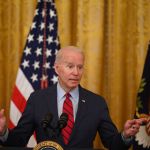
White House Press Secretary Robert Gibbs told reporters this afternoon that President Obama will sign a bill raising the debt ceiling and instituting PAYGO today.

Gibbs did not say whether the signing would be open to the press.

The legislation will raise the government's debt limit $1.9 trillion, to $14.3 trillion. It also re-institutes PAYGO, which requires that all legislation be paid for, either through tax increases or spending cuts.

Comments (5) | Join the Conversation!

Recommend Recommend (0)

February 12, 2010 2:09 PM   

So how is the Jobs Bill getting paid for?

Reply | Flag Abuse

Are you sure this comment violates TPM's Terms of Service?

mcc

user-pic

February 12, 2010 4:22 PM    in reply to Jim H

If I'm not mistaken the jobs bill passed by the House used money allocated for TARP, then returned.

The Senate bill I'm confused about in general.

Reply | Flag Abuse

Are you sure this comment violates TPM's Terms of Service?

February 12, 2010 2:09 PM   

It's funny actually. The debt limit is raised about 25% more than the record projected deficit, simultaneously with a measure to prevent deficits. Obviously even the Democrats don't believe PAYGO will work. Tsk.

Well after all, since the Dems took over Congress in 2007 the deficit is going to be $5 trillion more. In only 3 years! After that I wouldn't believe them either.

Reply | Flag Abuse

Are you sure this comment violates TPM's Terms of Service?

February 12, 2010 2:24 PM    in reply to shooter242

Shooter is the classic crappy room-mate who spends all the money out of any joint account on beer and lap-dances and then complains that there isn't any money left to buy toilet paper. We all got stuck with one of these room-mates at some point.

For years the Bush administration was spending money in and then asking for it to get paid for in suplementals. They were draining accounts across the government. They were eliminating regulations and creating massive unfunded mandates.

Now, when you get some honest accounting, suddenly you want to blame the accounts. Nice.

Reply | Flag Abuse

Are you sure this comment violates TPM's Terms of Service?

February 12, 2010 2:18 PM   

Off topic but check this out from the Financial Times. Webb is supporting a tax against the finance institutions and links this article on his website

The Financial Times Editorial: Tax the windfall banking bonuses


By: Martin Wolf

November 19, 2009

Windfall taxes are a ghastly idea. They are a sop to prejudice, a burden on risk-taking and a form of arbitrary confiscation. No sensible person should support them. So why do I now find the idea of a windfall tax on banks so appealing? Well, this time, it really does look different.

First, all the institutions making exceptional profits do so because they are beneficiaries of unlimited state insurance for themselves and their counterparties. As Andrew Haldane of the Bank of England argues, the state has “become the last resort financier of the banks”.* In the UK, total support amounted to a staggering 74 per cent of gross domestic product. These must be the largest business subsidies ever.

Second, the profits being made today are in large part the fruit of the free money provided by the central bank, an arm of the state. The state is giving the surviving banks a licence to print money.

Third, the case for generous subventions is to restore the financial system – and so the economy – to health. It is not to enrich bankers, particularly not those engaged in the sorts of trading activities that destroyed the financial system in the first place.

Fourth, ordinary people can accept that risk takers receive huge rewards. But such rewards for those who have been rescued by the state and bear substantial responsibility for the crisis are surely intolerable. What makes them yet more so is that the crisis has devastated the prospects of tens, if not hundreds, of millions of innocents all over the globe. The public finances will be devastated for decades: taxes will be higher and public spending lower. Meanwhile, bankers are about to reap huge rewards. This damages the legitimacy of the market economy.

Fifth, it is hard to argue in favour of exceptional interventions to bail out the financial sector at times of crisis, and also against exceptional interventions to recoup costs when the crisis is past. “Windfall” support should be matched by windfall taxes.

Finally, these are genuine windfalls. They are, as George Soros has said, “hidden gifts” from the state. What the state gives, the state is entitled to take back, if it is not used for the state’s purposes.

So the question, in my mind, is not whether a windfall tax can be justified but whether it can be designed successfully. All taxes have unintended consequences. One must be particularly careful with this one.

Since the aim of policy is to recapitalise the banks, the tax should not reduce their ability to do so. It would be far better then to impose a tax on contributions made to the bonus pool. There is no public interest in such payments. Since it would be a one-off event, it should not affect incentives (unless banks plan to create systemic crises every few years). If the tax applied to all banks operating within a given jurisdiction, it would not affect competitiveness among them. The case seems strong – even more so if the tax could be implemented across major jurisdictions, simultaneously.

Yet windfall taxes cannot contain financial excess, precisely because their goal is not to affect incentives. So what is to be done?

As Mr Haldane notes, we have seen “a progressive rise in banking risk and an accompanying widening and deepening of the state safety net”. As the liabilities of the banks have become ever more socialised and so equity cushions have become increasingly redundant, the incentive for both limited liability shareholders and employees to game the taxpayer has risen greatly. It is rational for banks to choose risky strategies because they take the upside and taxpayers much of the downside.

Over the past half century, UK bank capital has remained at between 3 per cent and 5 per cent of assets, these assets have risen tenfold, relative to GDP, and returns on equity have averaged 20 per cent. Such high returns, in an established industry, must mean either high barriers to entry or excessive risk-taking. The former are undesirable and the latter terrifying, particularly in view of the huge rise in the state’s exposure to the risks.

We will never have a better opportunity than now to redress the deteriorating terms of trade between the banks and the state. A big part of the solution must be to shift incentives. The more credible are the pre-announced limits on support from government, the more effective will be the changes in incentives inside banks, and vice versa. The less we are able to shift these incentives, the more important it will be to impose heavy regulation. The combination of today’s incentives with today’s safety nets and yesterday’s “light touch” regulation was devastating.

Yet, regardless of the success of reforms of incentives in – and regulation of – the financial sector, it is reasonable to recoup not only the direct fiscal costs of saving banks but even some of the wider fiscal costs of the crisis. The time has come for some carefully judged populism. A one-off windfall tax on bonuses would make the pain ahead for society so very much more bearable. Try it: millions will love it.

Reply | Flag Abuse

Are you sure this comment violates TPM's Terms of Service?

Leave a comment

Your response:

Follow us!

Most Popular

TPM Stories Now Surging on