TPMDC

McConnell’s Revisionist History: Congress Gave Obama Everything He Wanted!

McConnell’s Revisionist History: Congress Gave Obama Everything He Wanted!

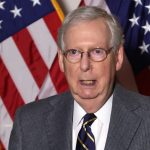
Senate Minority Leader Mitch McConnell (R-KY) has embraced the argument that President Obama was able to pass every bit of his legislative agenda in his first two years thanks to large Democratic majorities in both houses of Congress. It’s intended as a counterpoint to the President’s re-election strategy of attacking the congressional GOP as do-nothing obstructionists. But it’s also a revisionist history of the 111th Congress, during which McConnell more than any other Republican in Washington stood athwart Obama’s agenda to great effect.

The White House has “been trying to pretend like the President just showed up yesterday, just got sworn in and started fresh,” McConnell declared Sunday on CNN’s State of the Union. “In fact, he’s been in office for three years. He got everything he wanted from a completely compliant Congress for two of those three years… We are living in the Obama economy.”

This isn’t a new claim for McConnell, but it’s audacious even by Washington’s lax standards. It was McConnell, after all, who led Senate Republicans in serial filibusters — a record-setting number — successfully thwarting large chunks of Obama’s agenda.

By forcing Democrats to find 60 votes to nearly every action, McConnell and his members were able to block major initiatives including climate change and immigration reform bills, various appropriations bills, myriad presidential appointments, and arguably also a Democratic effort to let the Bush tax cuts expire for high incomes. Meanwhile, big legislative items that did pass, such as health care reform and the economic stimulus package, were notably scaled back as a result of the GOP filibusters.

McConnell debuted this line of attack last October when Obama began calling out congressional Republicans. “He owned the Congress for the first two years,” he told reporters at the time. “They did everything he wanted. Everything. The only thing they forgot to do — I don’t know why they overlooked this — they forgot to raise taxes.”

What the Kentucky Republican neglected to mention is that Democrats mounted a December 2010 push to end the Bush-era tax cuts on income over $250,000, and for millionaires. The GOP prevented both measures from achieving the 60-vote supermajority required to beat back a filibuster.

McConnell’s Senate minority also thwarted the majority in the Democrats’ DREAM Act, which failed late in 2010 even though they had 55 votes in support.

Senate Republicans blocked key appropriations bills in December 2010 — a gambit that touched off the government shutdown fight in spring of 2011. They prevented confirmation of key bureaucrats, including Donald Berwick, Obama’s pick to run the Medicare and Medicaid programs. Berwick was awarded a rare recess appointment, and led implementation of the health care law until last month as a result. Most others weren’t so lucky.

On the stimulus package, President Obama’s initial proposal was well over $800 billion in new spending and tax breaks, but the 60-vote requirement shrank it to well under $800 billion. GOP opposition to health care reform was a key obstacle to a public insurance option and remained a source of partisan vitriol for months.

McConnell candidly explained the strategy behind the obstruction early 2011, after reaping the benefits in the midterm elections. “We worked very hard to keep our fingerprints off of these proposals,” he told The Atlantic’s Josh Green, arguing that it was important to deny Dems any claim to bipartisanship. “When you hang the ‘bipartisan’ tag on something, the perception is that differences have been worked out, and there’s a broad agreement that that’s the way forward.”

Beyond limiting Obama’s ability to govern, McConnell’s wall of obstruction had the ancillary effect of damaging the President’s public image, as the unified GOP opposition helped them characterize Obama as a polarizing partisan. McConnell, who has said his “single most important” goal is to make Obama a one-term president, is now trying to cash in further politically by claiming that his successful campaign of opposition had no impact on Obama’s governance.

The political potency of McConnell’s argument is obvious: If Obama did everything he wanted in his first two years, it follows that his broadsides against Republicans ought to be ignored. In reality, Republicans had a significant impact on policymaking in 2009 and 2010 — and that was largely thanks to McConnell himself.

Sahil Kapur

Sahil Kapur is a congressional reporter for TPM. He previously covered politics and public policy for numerous publications including The Guardian and The Huffington Post. He can be reached at sahil [at] talkingpointsmemo.com.

Top Stories From TPM

Oklahoma GOP Sen. Tom Coburn Will Seek To Offset Tornado Aid

Secret Service Looking Into Radio Host’s Graphic Violent Comments About Obama, Hillary Clinton

GOP Nominee In Virginia Praised Three-Fifths Clause As An ‘Anti-Slavery Amendment’

VA GOP's Attorney General Nominee Wanted Women To Report Miscarriages To Police Or Face Jail Time

The NRA Thinks These Are The ‘Coolest Gun Movies’ Ever

McCain, Collins Slam Republicans For Budget Hypocrisy

Disqus Conversations

Click here to read the Disqus Commenting FAQ.

Editor & Publisher

Josh Marshall

Managing Editor

David Kurtz

Associate Editor

Nick Martin

Assistant Editor

Igor Bobic

Reporters

Brian Beutler

Sahil Kapur

Eric Lach

Hunter Walker

Frontpage Editor

Zoë Schlanger

News Writers

Tom Kludt

Video Editor

Michael Lester

General Manager & General Counsel

Millet Israeli

VP, Ad Sales

Bruce Ellerstein

Associate Publisher

Kyle Leighton

Assistant To The Publisher

Joe Ragazzo

Designer/Developer

Matthew Wozniak

Design Associate

Christopher O’Driscoll