President Obama signed the payroll tax cut package into law late Wednesday night, capping off a months-long saga that might prove to be Congress's last major battle before the 2012 election. So just what does the final outcome mean for the various political players? Here's how things broadly broke down.
President Obama is the obvious winner, having portrayed himself throughout the long fight as the champion of middle-class tax cuts and economic security for the long-term unemployed. The payroll battle, which played out alongside a gradually improving economy, helped bump up Obama's approval ratings and gave him an important political weapon for re-election.
PERMALINK | COMMENTS | RECOMMEND RECOMMEND (0)
You'd think that with the economy growing, and indeed accelerating in its growth, the GOP would be setting itself up to claim all the credit come November -- rather than reluctantly embracing President Obama's call for a payroll tax cut, while talking down its efficacy as a tonic for the job market.
Instead they're obstinately digging in. And with all of the party's presidential hopefuls lukewarm on the payroll tax cut and leapfrogging each other with plans to cut taxes for wealthy Americans alone, Republicans are inadvertently clarifying for voters what they know to be unpopular economic policies.
"Let's be honest, this is an economic relief package, not a bill that's going to grow the economy and create jobs," said House Speaker John Boehner last week in a statement ahead of the passage of the payroll tax cut deal.
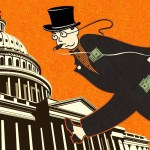
The package itself won a modest majority of Republican votes in the House and a significant minority of Republican votes in the Senate. But both stand in complete agreement with the GOP presidential field on the need to enact large, permanent tax cuts for the highest earners in the country. This is what Mitt Romney refers to as pro-growth tax policy. So to give you a clearer sense of what the GOP would have rather done than renew the payroll tax cut, here's a graphical breakdown.
PERMALINK | COMMENTS | RECOMMEND RECOMMEND (0)Quick on the heels of the House, the Senate has passed legislation to extend a two percent payroll tax cut through the end of the year.
The final vote was 60-36 with 30 Rs and 6 Ds bucking their leaders to oppose the package. It now goes off to a jubilant White House for President Obama's signature.
The legislation, which also extends emergency unemployment benefits and Medicare reimbursement rates until January 1, 2013.
PERMALINK | COMMENTS | RECOMMEND RECOMMEND (0)By a comfortable margin, the House of Representatives on Friday passed legislation to extend a two percent payroll tax cut through the end of the year.
The final vote was 293-132, with 91 Republicans and 41 Democrats bucking their party leaders to vote against the package. Five Republicans and four Democrats did not vote.
The bill reflects an agreement between GOP and Democratic leaders in the House and Senate. It also extends emergency unemployment insurance though December, though it reduces the number of weeks in which people looking for work can draw on benefits. And it means that Medicare physicians won't experience a steep pay cut by extending their reimbursement rates for at least 10 months.
PERMALINK | COMMENTS | RECOMMEND RECOMMEND (0)TPM has obtained a detailed summary of the payroll tax cut deal, prepared by House GOP. Scroll down to read the document.
The deal caps off lengthy negotiations that achieved a breakthrough this week after House Republicans agreed to extend the payroll tax cut without offsets. Unemployment insurance and the Medicare "doc fix" will be paid for with spending cuts elsewhere in the budget.
"As of 4 p.m. a majority of House conferees and a majority of Senate Conferees have signed the conference report for HR 3630," a GOP aide told TPM Thursday.
It's expected to be voted on and wrapped up by the end of this weekend.
Payroll Tax Holiday Agreement-TPM
PERMALINK | COMMENTS | RECOMMEND RECOMMEND (0)The House and Senate have cut a deal to extend the payroll tax cut, unemployment benefits, and Medicare physician reimbursement rates. But it almost didn't happen. And the near miss is exposing a rift between House GOP leaders and their Senate counterparts.
Late on Wednesday evening, Senate negotiators -- four Democrats, three Republicans -- had a vote count problem. To move the payroll tax cut forward, four of them needed to sign on to the broad agreement. House Dem and GOP negotiators were all lined up. But none of the Senate Republican conferees would put pen to paper. When Democrat Ben Cardin (D-MD) wouldn't sign on either, based on his objection to cuts to federal worker pensions, the Senate found itself one vote shy.
PERMALINK | COMMENTS | RECOMMEND RECOMMEND (0)Lawmakers sealed the deal late Wednesday night on yearlong extensions of the payroll tax cut, unemployment compensation and Medicare physician payment rates. It's a political victory for President Obama and the conclusion of a no-win situation for Republicans that they were eager to move past.
The agreement was announced by Sen. Max Baucus (D-MT) and Rep. Dave Camp (R-MI), the two lead negotiators in conference committee. Final votes are expected by the end of this weekend.
The conclusion comes at the end of a grueling series of negotiations that spilled over from last year. That led House Republicans to this week drop their demand that the payroll tax cut be offset with spending cuts elsewhere, paving the way for the agreement as the two sides had been deadlocked on pay-fors.
PERMALINK | COMMENTS | RECOMMEND RECOMMEND (0)
With the ink drying on a final deal, one of the highest profile Republicans in Congress said the December and February fights over extending the payroll tax cut and other expiring provisions through the end of the year have hurt Republicans -- at least in the short term.
"It's a tough issue because they had to compromise... But yeah, I think the payroll tax deal, from a political perspective, certainly caused damage because it muddled the differences [between the parties," House Budget Committee Chairman Paul Ryan (R-WI) told reporters at a breakfast roundtable hosted by the Christian Science Monitor. "It got us down into a skirmish, where the differences got muddled, which is I think what the President loves."
PERMALINK | COMMENTS | RECOMMEND RECOMMEND (0)Barring an unexpected collapse in negotiations, a broad deal to extend the temporary payroll tax cut and other expiring measures will be finalized Wednesday. But with time winding down, top Democrats and Republicans are still fighting over key details -- particularly how to pay for over $50 billion of the approximately $150 billion package.
One of the likely financing provisions would require federal workers to provide greater contributions to their own retirement packages.
"I'm very unhappy with the projected pay-fors which hit average working Americans, otherwise known as federal employees, pretty hard," House Minority Whip Steny Hoyer (D-MD) told TPM and one other reporter in the Capitol Wednesday. "I don't know the exact details and the exact details are being worked on. So from that standpoint I'm not happy."
Hoyer represents a Maryland district that's chockablock with federal workers, which underlies his concerns. Asked if he himself planned to vote for the measure, Hoyer proclaimed "I don't know."
Top Democratic and Republican negotiators have struck a broad tentative agreement to extend the payroll tax cut, unemployment insurance and Medicare physician payment rates through the end of the year, aides from both sides who are familiar with the deal tell TPM. Some of the details have yet to be ironed out, but Congress appears to have had a critical breakthrough in negotiations to prevent the three provisions from lapsing.
The payroll tax cut will be extended through 2012 without an offset, at a cost of $185 billion. House Republicans paved the way for it this week by dropping their demand that continuation of the tax holiday be matched with equal spending cuts elsewhere.
PERMALINK | COMMENTS | RECOMMEND RECOMMEND (0)House Democrats will support a GOP bill to extend the expiring payroll tax cut through the end of the year, when Republicans bring it to a vote later this week. That basically puts to rest any remaining doubts that the provision will expire at the end of the month.
Now the fight is on between the parties over whether and how to renew two other expiring provisions -- extended unemployment benefits, and Medicare physician reimbursement rates (the "doc fix") -- before March. And the balance of power in this battle is much less clear.
PERMALINK | COMMENTS | RECOMMEND RECOMMEND (0)President Obama on Tuesday suggested that the House GOP's recent willingness to extend the payroll tax cut without offsets is "good news" but warned that it can't be taken for granted -- and capitalized by demanding an extension of the tax break and unemployment insurance without "ideological sideshows."
"The good news is over the last couple of days we've seen some hopeful signs in Congress that they realize that they've got to get this done. And you're starting to hear voices talk about how can we go ahead and make this happen in a timely way on behalf of the American people," Obama said at the White House. "That is good news."
PERMALINK | COMMENTS | RECOMMEND RECOMMEND (0)After a few hours of thought, Democrats have decided the GOP's blink on the payroll tax cut is an unvarnished good, not some devious trick.
Republicans have all but agreed to renew the payroll tax cut through the end of the year without paying for it -- a huge tactical swing for them. But they're still insisting that the other expiring measures -- extended unemployment insurance (UI), and Medicare physician reimbursements (the "doc fix") -- are somehow offset with cuts elsewhere.
Having taken the most politically important, and most costly item off the table, are Republicans in the driver's seat in negotiations over extending the other two items? Not necessarily.
A senior Senate Dem aide explains how Democrats might well proceed from here.
PERMALINK | COMMENTS | RECOMMEND RECOMMEND (0)The GOP's accession to reality on the payroll tax cut is being cast as a key victory for Democrats and President Obama. Republicans caved, the payroll tax will almost certainly be renewed, and the economy won't take a tough hit just as the recovery's beginning to accelerate.
But it also reveals a flaw -- a potentially huge flaw -- in the conservative movement's generational strategy to roll back the federal safety net.
These might sound like two wildly disparate issues, but they're actually variations on a years-long theme. And the outcome of the payroll tax debacle bodes poorly for the GOP on the rest of their long-run goals.
Here's why.
PERMALINK | COMMENTS | RECOMMEND RECOMMEND (0)Facing emboldened Democratic negotiators and a quickly thinning legislative calendar, House Republican leaders have offered to extend the payroll tax holiday through the end of the year without paying for it. The development represents a dramatic reversal for GOP leaders, who nearly allowed the payroll tax cut to lapse in December in part because of their insistence that the package be financially offset.
"Because the president and Senate Democratic leaders have not allowed their conferees to support a responsible bipartisan agreement, today House Republicans will introduce a backup plan that would simply extend the payroll tax holiday for the remainder of the year while the conference negotiations continue regarding offsets, unemployment insurance, and the 'doc fix,'" said GOP leaders in an official statement Monday afternoon.
That's a huge concession to legislative and political realities, and a tacit admission that Republican leaders desparately want to avoid another no-win fight over renewing a tax cut that overwhelmingly benefits the middle class.
PERMALINK | COMMENTS | RECOMMEND RECOMMEND (0)Democrats are emboldened enough by their political turn of fortune that party leaders are laying payroll tax cut contretemps at the feet of Republicans rooting for further economic strife.
"[W]e've seen improvement: The unemployment rate's going down; people are getting back to work; there's a more confident air in America," Sen. Dick Durbin (D-IL) told reporters Tuesday at a leadership briefing with reporters on Capitol Hill. "Let's make no mistake: There's some Republicans that don't think that really works with their strategy of defeating President Obama. These are some of the same voices that are opposing any bipartisan agreement to extend the payroll tax cuts."
Other top Democrats say the same.
PERMALINK | COMMENTS | RECOMMEND RECOMMEND (0)Top Democrats are openly calling into doubt the chances that Congressional negotiators will reach an agreement to renew the payroll tax cut before it expires at the end of the month. The culprit, they say, is a deep schism within the Republican conference over whether the the tax holiday is a good policy or just a political gimmick to help President Obama win re-election.
The consequences of failure would result in a typical middle-class worker taking home about $1000 less this year, just as demand is starting to return to the U.S. economy and the unemployed are beginning to find work. Democrats, sensing political momentum from improving economic conditions, are warning Republicans that they'll be held to account for the consequences if the tax cut ultimately lapses.
"Time is wasting, so that I'm very concerned about it, and whether or not they can get to agreement is in doubt at this point in time," House Minority Whip Steny Hoyer told reporters at his weekly Capitol briefing Tuesday. "Democrats want to see the economy grow, and there are some here, frankly, who are just as satisfied to have the economy not grow, not create jobs, not have GDP growth, so it can help their politics."
PERMALINK | COMMENTS | RECOMMEND RECOMMEND (0)